
Fall wardrobe basics are really about solving one annoying problem: mornings feel crisp, afternoons warm up, and by dinner you’re cold again.
If your closet is full but you still stare at it, fall is usually why. This season punishes outfits that can’t layer, and it exposes gaps like “no real jacket” or “only summer shoes.”
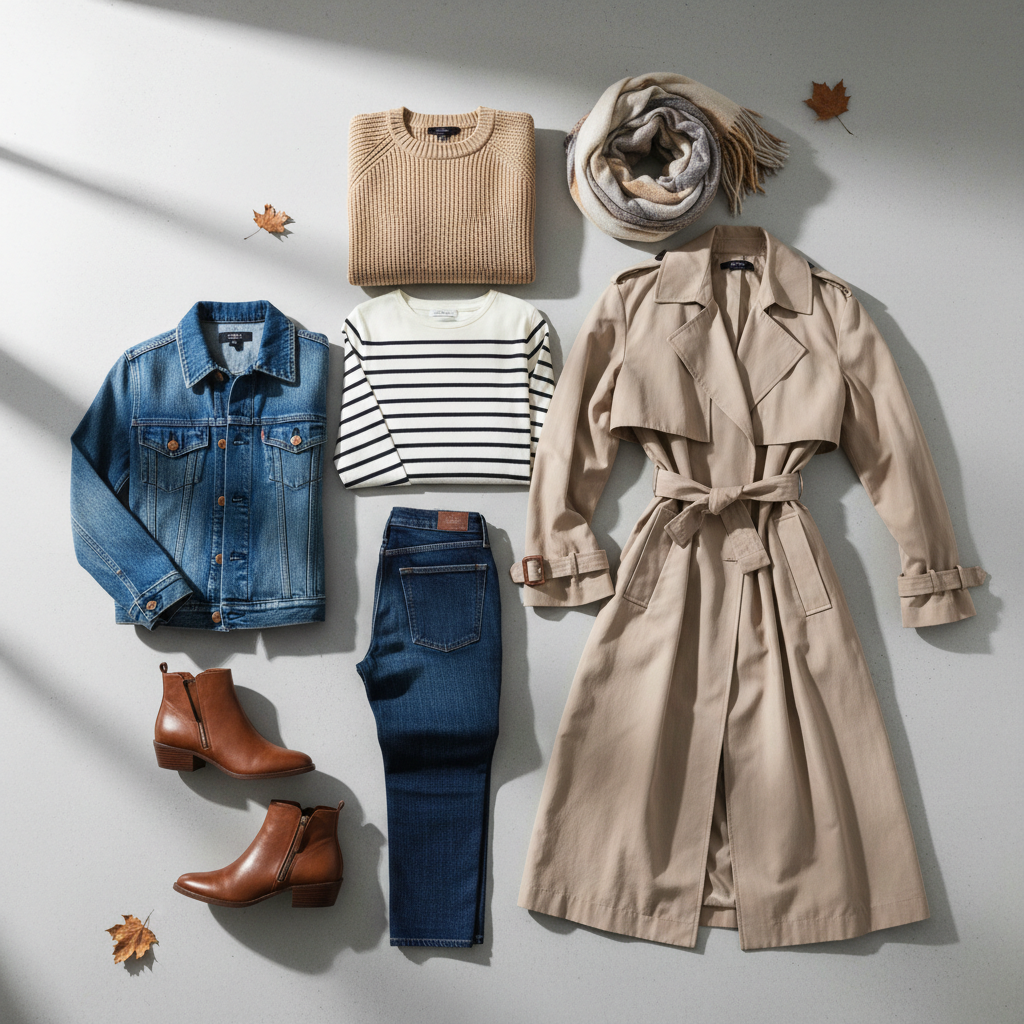
What you want is a tight set of pieces that mix easily, handle temperature swings, and still feel like you. Below is a practical checklist plus a way to shop without accidentally buying five versions of the same “nice sweater.”
What “basics” mean in fall (and what they don’t)
Basics in autumn aren’t boring, they’re the pieces that do the hard work: they layer cleanly, they match most of your closet, and they look intentional even when you’re dressing fast.
They also aren’t a fixed list for everyone. Your fall wardrobe basics will change depending on climate (Seattle vs. Dallas), lifestyle (office, campus, remote), and how much you walk outside.
- Fall basics should: layer without bulk, work in 50–75°F swings, and hold up to repeat wear.
- Fall basics should not: be trendy “statement” pieces you can’t rewear, or delicate fabrics that pill after two outings.
According to NOAA, fall weather patterns can be highly variable by region, which is a polite way of saying your outfit plan has to adapt, not assume.
The core fall capsule: 12–16 pieces that cover most weeks
If you’re building from scratch, aim for a compact set that creates lots of outfits. Add personality through color accents, jewelry, or one standout jacket, but keep the engine simple.
Tops (5–6)
- 2 tees (one white or cream, one dark): base layers that don’t fight with outerwear.
- 1–2 long-sleeve knit tops (stripe or solid): easy under jackets, less bulky than sweaters.
- 1 button-down (oxford or chambray): works open as a light jacket, or tucked for polish.
- 1 “nice” top (silk-like, sateen, or fine knit): for dinners, meetings, or photos.
Mid-layers (2–3)
- 1 lightweight sweater (merino/cotton blend): clean layering, minimal itch.
- 1 chunkier sweater or cardigan: for colder evenings, cozy but still structured.
- Optional: a sweatshirt that looks intentional (solid color, good neckline, not overly slouchy).
Bottoms (3–4)
- Dark straight-leg jeans: fall MVP, reads polished and pairs with everything.
- Relaxed jeans or trousers: for comfort, travel, casual office days.
- 1 skirt or dress (midi length works best for temperature swings): add tights when needed.
- Optional: leggings only if you have long tops or layers that make them feel finished.
Outerwear (2–3)
- Light jacket (denim, utility, or bomber): for early fall and casual looks.
- Smart coat (trench, wool blend topcoat): makes basics look expensive fast.
- Optional puffer vest: great for walks, school runs, or travel days.
Shoes (2–3)
- Ankle boots (low heel or flat): the easiest bridge from summer to winter.
- Everyday sneakers (clean, minimal): for commuting and long days.
- Optional loafers: if your fall is mild, they do a lot of work.
Accessories (2–4)
- One scarf (wool blend or cashmere blend): warmth without committing to a big coat.
- One belt: instantly upgrades jeans and sweaters.
- 2 pairs of socks (thin + thicker): comfort matters more than people admit.
- Optional hat: if wind and rain show up in your area.
Quick self-check: what you’re missing (in 5 minutes)
Before you shop, do a fast audit. Most people don’t need more clothes, they need fewer gaps.

- Layer test: Can you wear a tee + knit + jacket without feeling bulky at the arms?
- Three-outfit test: Can your main jeans make 3 different outfits with different tops?
- Weather test: Do you own one piece for wind/rain (even just a trench with a hooded layer)?
- Shoe reality check: Do you have shoes you can walk 30–60 minutes in?
- Laundry test: Can you go 7 days without running out of base layers?
- Occasion test: Do you have 1 outfit that works for “nice but not formal” plans?
If you fail two or more, that’s your shopping list. If you fail only one, you’re probably better off tailoring, repairing, or upgrading quality rather than buying more.
How to choose fabrics and fits that actually work in autumn
Fall dressing gets easier when your fabrics do the temperature control for you. Also, fit matters more in layers, because tight arms and short hems turn “cozy” into “why am I trapped.”
Fabric guidance (practical, not precious)
- Merino wool: breathable warmth, usually less itchy, great for thin sweaters.
- Cotton blends: easy care, good for long sleeves and tees, less insulating.
- Wool blends: for coats, look for a tighter weave so wind doesn’t cut through.
- Denim: heavier denim feels more “fall,” but make sure it’s comfortable sitting all day.
According to International Wool Textile Organisation (IWTO), wool fibers can help with temperature regulation and moisture management, which is why merino often feels comfortable across changing conditions.
Fit rules that stop layering from going wrong
- Base layer: closer to the body, but not tight at the underarm.
- Mid-layer: slightly relaxed, so it slides over tees and under coats.
- Outerwear: you should be able to hug yourself and drive comfortably.
If you’re between sizes in coats, many people prefer sizing up for sleeves and layering, then tailoring the waist if needed.
Outfit formulas: easy combos you can repeat without feeling repetitive
This is where fall wardrobe basics pay off. You’re not inventing outfits daily, you’re rotating a few formulas that always look “put together.”
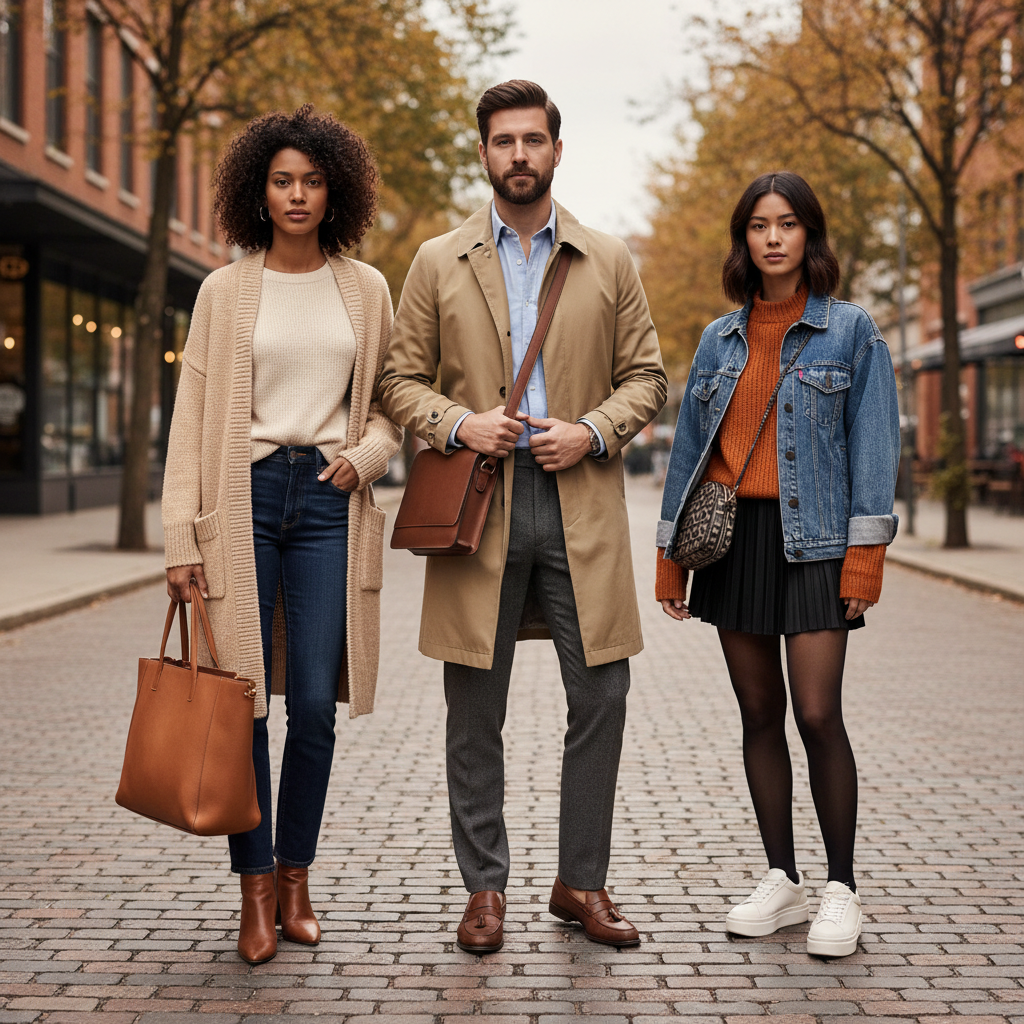
- Uniform #1: tee + cardigan + dark jeans + ankle boots
- Uniform #2: long-sleeve knit + trench/topcoat + trousers + loafers
- Uniform #3: button-down (open) + tee + relaxed jeans + sneakers
- Uniform #4: lightweight sweater + midi skirt + boots (add tights when needed)
- Uniform #5: nice top + straight jeans + smart coat
Small change, big impact: switch the shoe, add a belt, or swap outerwear. That’s usually enough to make repeats feel fresh.
Smart shopping plan: build it in two passes (and avoid regret buys)
Most closets get messy because people shop “vibes” instead of filling the missing link. Try two passes: essentials first, fun second.
Pass 1: buy only what fixes daily friction
- A jacket that fits over layers
- One pair of walkable fall shoes
- Two base-layer tops you’ll actually wear weekly
Pass 2: add one personality piece
- A patterned scarf, a colored sweater, or a statement coat
- A dress or skirt that works with boots
Budget table (a realistic priority guide)
| Category | Spend Priority | Why it matters |
|---|---|---|
| Outerwear | High | Most visible layer, defines outfits, comfort in wind/rain |
| Boots / everyday shoes | High | Foot comfort drives how often you wear an outfit |
| Knitwear | Medium | Better fabric holds shape, pills less, layers better |
| Denim / trousers | Medium | Fit matters, but you can find solid options at many prices |
| Tees / base layers | Low–Medium | Replaceable, but good necklines and opacity are worth paying for |
| Accessories | Low | High styling return, easy to thrift or buy on sale |
Common mistakes that make fall outfits feel “off”
These are the issues that waste money because they look fine on a hanger, then never leave the closet.
- Buying too many heavy sweaters early: you’ll overheat indoors, then still need a jacket outside.
- Ignoring sleeve and shoulder fit: if you can’t layer comfortably, you won’t wear the coat.
- All bottoms, no layers: jeans alone don’t solve temperature swings, mid-layers do.
- One “perfect” boot that hurts: the best-looking shoe is useless if you dread walking in it.
- Color chaos: if everything is a different “statement,” outfits feel loud and hard to repeat.
Also, don’t underestimate tailoring. Hemming trousers or adjusting a coat sleeve can make an affordable piece behave like a premium one.
Key takeaways and a simple next step
If your outfits feel random in autumn, it usually means your layers don’t cooperate, not that you “don’t have style.” A small edit and a few intentional purchases get you back in control.
- Key point: prioritize layers (base + mid + outerwear) over standalone pieces.
- Key point: buy for your real week, not your imaginary plans.
Action step: do the 5-minute self-check, then pick two gaps to fix this week, no more. That’s how a closet changes without spiraling into a cart full of maybes.
FAQ
What are the most important fall wardrobe basics if I only buy five items?
Most people get the most wear from a light jacket, a smarter coat, dark straight-leg jeans, a thin sweater, and walkable ankle boots. Those five pieces create lots of outfits without needing a full refresh.
How do I build a fall wardrobe on a budget without looking cheap?
Put more of your budget into outerwear and shoes, then keep base layers and accessories simple. A decent coat can make inexpensive knits and tees look intentional, especially in neutral tones.
Do I need a trench coat if I already have a denim jacket?
Not always. A denim jacket covers casual days, but a trench (or any structured coat) helps with rain and gives you a “polished” option. If you attend dinners, events, or office days, the upgrade often feels worth it.
What colors are easiest to mix for fall outfits?
Neutrals usually do the heavy lifting: black, navy, gray, cream, and camel. If you like color, pick one accent family (like burgundy or forest green) so it threads through outfits instead of clashing.
How can I layer without feeling bulky?
Use thinner base layers, then one warm mid-layer, then outerwear sized to accommodate it. Bulky happens when every layer is thick, or when the jacket is too tight in the arms and shoulders.
Are leggings part of fall wardrobe basics?
They can be, but they work best when styled deliberately, like with an oversized button-down, a long sweater, or a structured jacket. If you keep reaching for leggings but feel underdressed, the “top layer” is the missing piece.
When should I consider getting professional help (tailor or stylist)?
If you keep buying items you don’t wear, or your outerwear never fits right over layers, a tailor can be a high-impact fix. A stylist can help if you’re changing size, job dress code, or you’re rebuilding after a big lifestyle shift, but it’s still smart to set a budget and goals upfront.
If you’re trying to simplify your closet fast, start by listing your top three weekly activities and build your fall wardrobe basics around those, not around one-off occasions, it’s the most reliable way to stop overbuying and still feel ready for the season.