
women elevated basics wardrobe list is really about solving one problem, you want outfits that look intentional without needing a whole new closet.
If your wardrobe feels full but nothing feels “put together,” it’s usually not a style problem, it’s a basics problem, the pieces don’t layer well, the fits fight each other, or the colors never quite match.
This guide gives you a practical list, plus how to choose each item so it reads elevated instead of plain, and how to avoid the common traps like random trendy add-ons or “capsule” shopping that turns into duplicates.
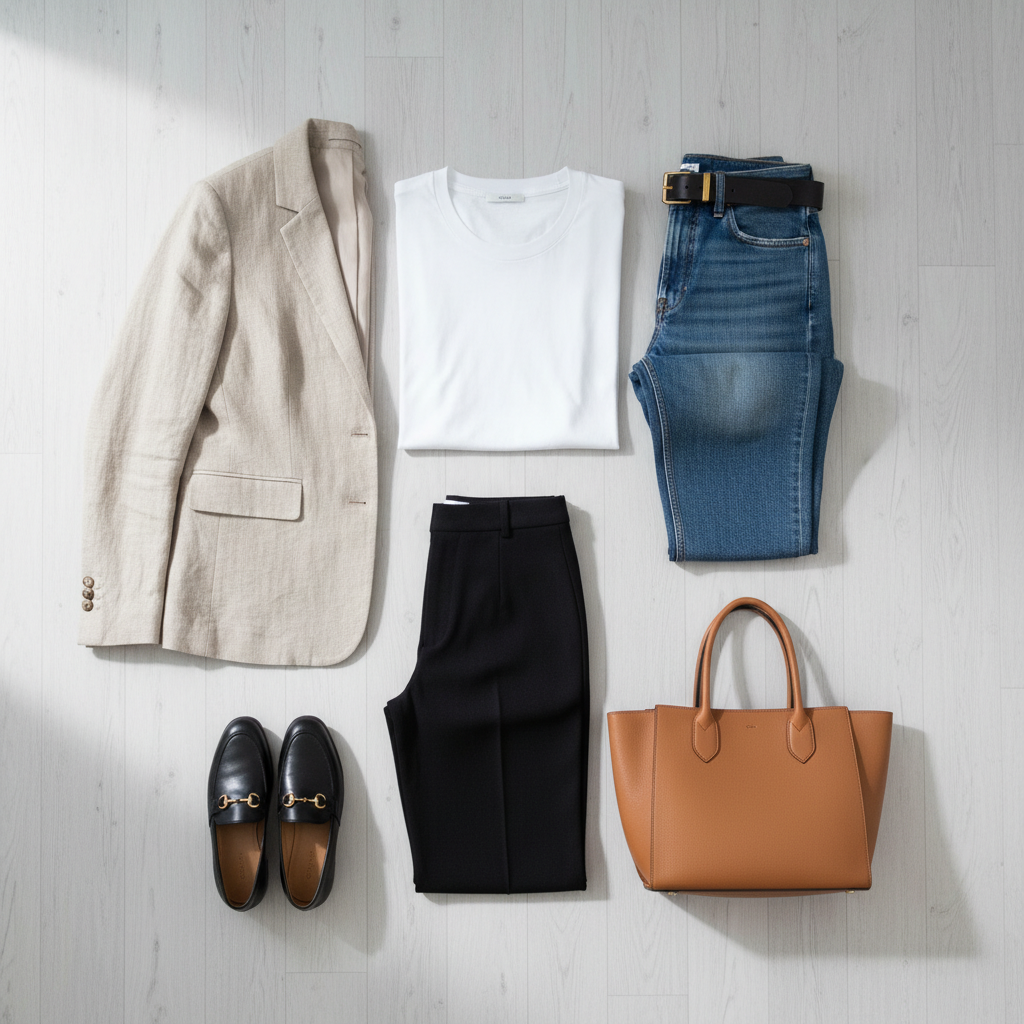
What “Elevated Basics” Actually Means (and Why It’s Hard)
Elevated basics aren’t “expensive basics,” they’re simple pieces with deliberate fit, fabric, and finishing so they look sharp even when you repeat them.
In real life, people get stuck in two places, buying basics that look fine on a hanger but collapse on the body, and mixing basics that belong to different style “languages” such as sporty tees with office trousers, or romantic blouses with chunky streetwear sneakers.
- Fit: shoulder seams land correctly, waist placement makes sense, hems look intentional.
- Fabric: enough weight or structure that it drapes cleanly, not clingy or see-through.
- Finish: buttons, stitching, collars, and hardware look neat up close.
- Repeatability: you can wear it weekly without it feeling tired.
According to Federal Trade Commission (FTC), clothing labels and fiber content disclosures matter for informed purchasing, which is a boring detail until you keep buying sweaters that pill fast or white tees that turn sheer after two washes.
Quick Self-Check: Do You Need an Elevated Basics Reset?
You don’t need to toss everything. You need to identify what’s causing the “nothing to wear” feeling.
- You own plenty of tops, but almost no good bottoms that anchor outfits.
- Your outfits look fine in photos, but in motion they feel sloppy, stretching, wrinkling, riding up.
- You rely on the same 1–2 pairs of shoes because the rest feel too casual or too fussy.
- Your closet has many colors, but few look good together, so you default to black.
- You keep rebuying the “same” tee or blazer, but the new one never hits like the old one.
If two or more apply, a women elevated basics wardrobe list approach usually helps because it reduces decision fatigue and makes your outfits more modular.
The Women Elevated Basics Wardrobe List (Core Pieces)
Think of this as a working starter set. You can adjust counts based on lifestyle, but keep the categories, they’re what create outfit range.
Tops
- 1–2 premium-feel tees (crew or slight scoop), opaque, structured neckline.
- 1 button-down (cotton poplin or similar), slightly relaxed, not oversized to the point of sloppy.
- 1 knit top (fine gauge), easy to tuck, no obvious pulling at bust or shoulders.
- 1 elevated tank (wide straps, thicker rib), works solo and under blazers.
Bottoms
- 1 straight-leg jean in a clean wash, minimal distressing.
- 1 tailored trouser (mid/high rise), waistband sits flat, hem length matches your main shoes.
- 1 skirt or dress alternative (midi skirt or slip skirt), matte finish tends to look more modern.
Layers
- 1 blazer with shape at the shoulder, sleeves that can be altered.
- 1 cardigan or knit jacket that reads polished, not “at-home.”
- 1 weather layer (trench, wool coat, or clean puffer), choose based on your climate.
Shoes
- Loafers or sleek flats for work and weekends.
- Clean sneakers (minimal branding) that look intentional with trousers.
- Low heel or heeled boot for dressier moments, stable enough for real walking.
Accessories
- One structured everyday bag that holds essentials without slouching.
- One belt with simple hardware, matches your main shoe tone.
- Small jewelry set (studs or hoops, simple chain), consistent metal tone.
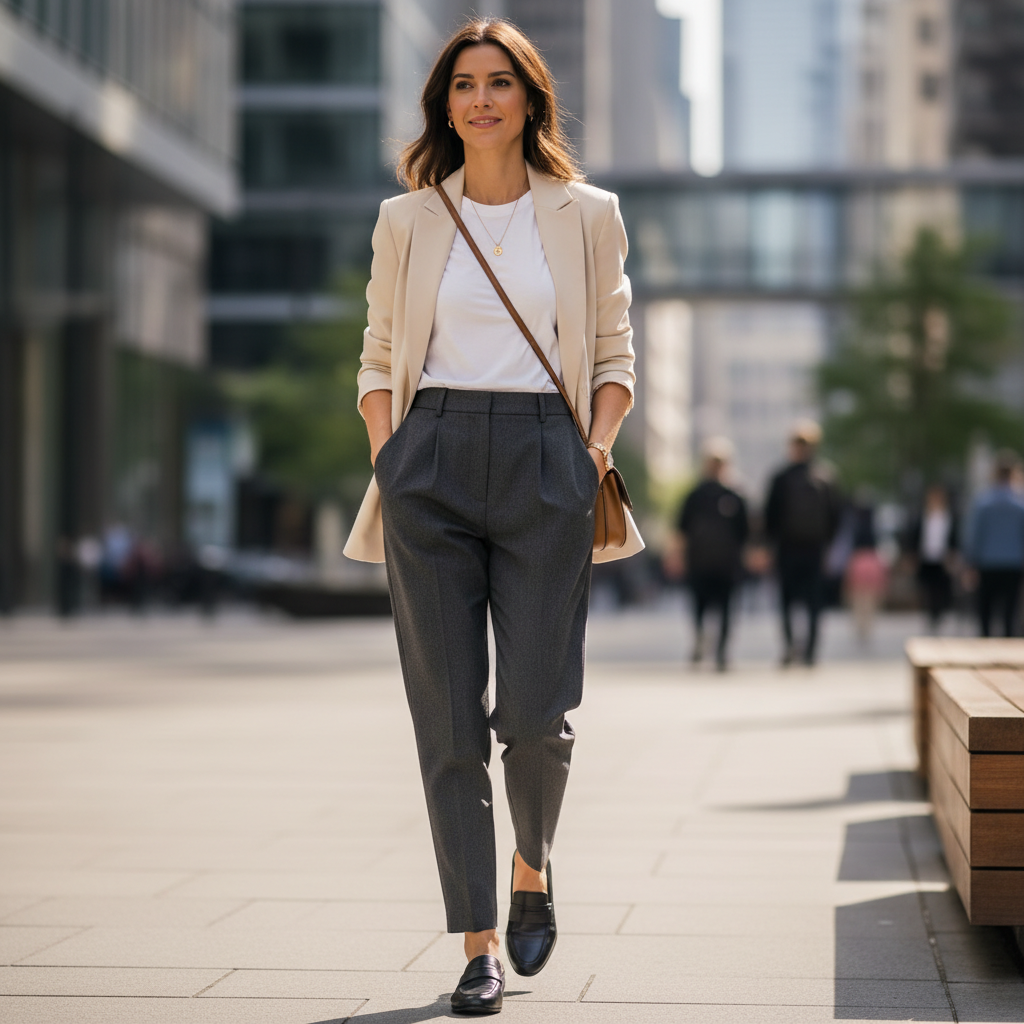
Choosing Each Piece So It Looks Elevated (Not Just Basic)
The same category can look wildly different based on a few details. This is where a women elevated basics wardrobe list becomes useful, it forces you to choose quality signals on purpose.
Fit rules that make outfits look expensive
- Shoulders should align, especially in blazers and button-downs.
- Waistband lies flat, no gaping, no constant tugging.
- Hems look intentional, even if you need a tailor, especially for trousers.
Fabric cues to look for (quick in-store test)
- Hold it to the light, if it goes sheer and you didn’t plan for layering, skip.
- Scrunch it in your hand for five seconds, if it wrinkles aggressively, expect daily frustration.
- Check lining in skirts and trousers, lining often improves drape and comfort.
Color strategy that avoids “closet full, nothing matches”
- Pick 2 core neutrals (often black, navy, charcoal, cream, camel) and commit.
- Add 1–2 accent colors that flatter your skin tone and repeat them across tops and accessories.
- Keep denim washes consistent, mixing too many washes can reduce outfit cohesion.
Capsule Planning Table: A Simple Mix-and-Match Map
If you want fewer pieces but more outfits, plan around anchors. This table keeps decisions grounded.
| Category | Recommended Count | Best Colors to Start | What Makes It “Elevated” |
|---|---|---|---|
| Tees | 1–2 | White, black, ivory | Opaque fabric, clean neckline, holds shape |
| Trousers | 1 | Black, navy, charcoal | Flat waistband, clean drape, hem tailored |
| Jeans | 1 | Medium blue or dark wash | Minimal distressing, consistent wash |
| Blazer | 1 | Black, navy, camel | Structured shoulder, sleeve length right |
| Everyday shoes | 2 | Black, tan, white | Minimal hardware, clean silhouette |
How to Build It in 3 Realistic Shopping Rounds
Most people fail by buying everything at once, then realizing nothing fits together. Build in rounds so each purchase earns its place.
Round 1: Fix your anchors
- Choose one great trouser and one great jean, these make outfits look intentional fast.
- Buy shoes that match those bottoms, loafers or clean sneakers usually cover the most ground.
Round 2: Add repeatable tops
- Get tees and a knit top that tuck smoothly into both bottoms.
- Pick a button-down that works open as a light layer too.
Round 3: Add the “polish layer”
- Choose a blazer or knit jacket that instantly upgrades the tee-and-jeans baseline.
- Add one bag and one belt, your outfit will look finished even on low-effort days.
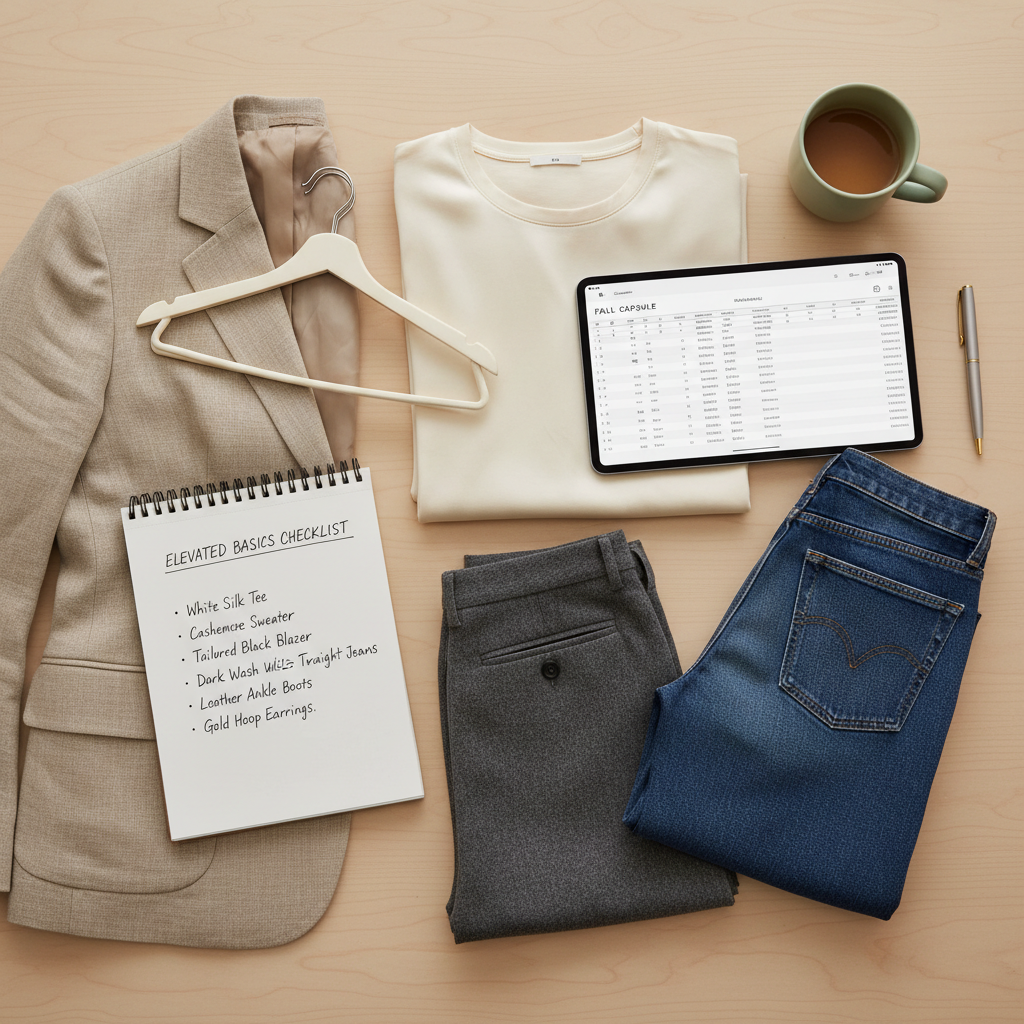
Common Mistakes That Make Basics Look “Meh”
These show up constantly, even in closets with good brands and plenty of pieces.
- Ignoring tailoring: a small hem or waist adjustment can change how “elevated” your outfit reads.
- Overdoing oversized: relaxed can look chic, but head-to-toe oversized often reads unfinished.
- Buying scratchy knits: if you avoid wearing it, it’s not a staple, no matter how classic.
- Mixing too many aesthetics: preppy loafers, sporty windbreaker, and romantic skirt can work, but it needs intent, not accident.
- Random “statement” pieces too early: statements work better after your anchors and colors are stable.
According to Consumer Reports, clothing care and laundering choices can affect longevity, so if you keep replacing tees and knits, it’s worth checking care labels and washing routines, not just blaming the brand.
Key Takeaways and a Simple Next Step
An elevated closet doesn’t require a massive budget, it usually requires clearer rules. Keep your women elevated basics wardrobe list focused on anchors, consistent colors, and fabrics that behave in real life.
- Start with bottoms and shoes, they set the tone for everything else.
- Choose structure over flimsy, especially in tees, blazers, and trousers.
- Plan in rounds so you stop buying “almost right” pieces.
If you want one action today, pull out your most-worn trouser or jean, then find the top three tops you actually like with it, whatever doesn’t work tells you exactly what to buy next.
FAQ
What is a women elevated basics wardrobe list, in plain terms?
It’s a short list of simple items that look polished because the fit, fabric, and styling details are intentional, so you can repeat outfits without feeling underdressed.
How many pieces should an elevated basics wardrobe have?
Many people do well with 20–35 core items for the season, but the right number depends on work dress code, laundry frequency, and climate, it’s more about versatility than counting.
Are elevated basics only neutrals?
No, neutrals just make mixing easier. Adding one or two accent colors can make basics feel personal, as long as you repeat those colors across multiple items.
What basics are worth spending more on?
Trousers, shoes, and a blazer often return value because they set the outfit tone and get worn often, while tees can be mid-priced if they’re opaque and keep shape.
How do I know if a blazer fits correctly?
Shoulders should align, the lapels should lie flat, and you should be able to move your arms without the whole jacket pulling. If the sleeves are long, tailoring usually solves that.
Can I build this wardrobe if I work from home?
Yes, just shift the emphasis toward knit sets, polished tees, and comfortable trousers, then keep one blazer or structured layer for meetings and outings.
What if my weight fluctuates and basics stop fitting?
Consider pieces with forgiving structure, such as straight-leg jeans with slight stretch or trousers with a subtle elastic back, and keep one “in-between” option so you’re not forced into panic shopping.
If you’re trying to streamline shopping and want fewer mistakes, you can use this list as a checklist and build around one anchor outfit you love, then add only pieces that improve at least two outfits, not just one.