
Accessories styling tips usually come down to one thing: if your outfit feels “fine but not finished,” your accessories are either fighting each other or not doing any real work.
A lot of people blame their closet, but the faster fix is learning a few repeatable styling decisions you can make in 60 seconds, even on rushed mornings. This guide keeps it practical: how to choose one focal point, how to match metals without stress, and how to use shoes, bags, and jewelry to change the vibe of the same base outfit.
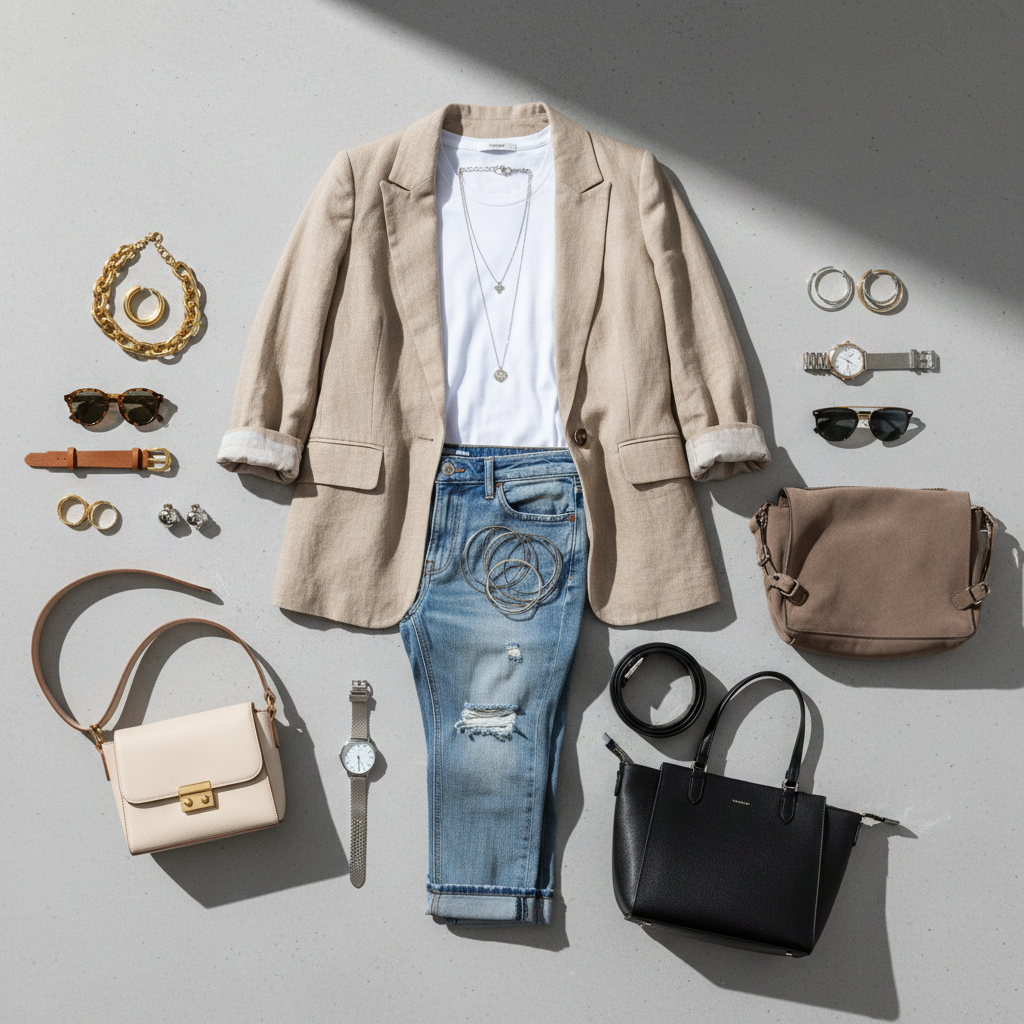
One quick heads-up: there is no universal “right,” but there are patterns that reliably look intentional. Once you see them, you stop impulse-buying random pieces and start building combinations that actually get worn.
Start with one hero accessory (everything else supports it)
If you try to make your earrings, necklace, belt, and bag all “the moment,” your look reads busy, not styled. Pick one hero piece, then keep the rest quieter so the eye has a place to land.
Here are hero choices that work in real life:
- Statement earrings with a simple neckline and pulled-back hair
- A structured bag to sharpen a casual outfit
- A standout shoe (color, texture, or silhouette) when your clothing is neutral
- A bold necklace only when earrings stay minimal
When you’re unsure, choose the hero based on where you want attention. Face-focused day, go earrings. Outfit-focused day, go bag or shoes.
Use the “rule of balance”: volume, sparkle, and skin
Most styling misfires aren’t about taste, they’re about balance. If your outfit has volume, keep accessories sleek. If your look is sleek, you can add a bit more impact.
Three fast balance checks
- Volume check: Oversized blazer or wide-leg pants usually pair best with slimmer jewelry and a cleaner bag shape.
- Sparkle check: If jewelry shines a lot, make other pieces matte or simple (and vice versa).
- Skin check: Higher necklines often look better with earrings and bracelets; open necklines can handle a pendant or chain stack.
These aren’t strict rules, but they prevent the common “too much happening” feeling that sends people back to plain studs and a tote every day.
Color matching without looking “matchy-matchy”
Color is where outfits can look either thoughtfully styled or accidentally thrown together. The trick is repeating a color once, not five times.
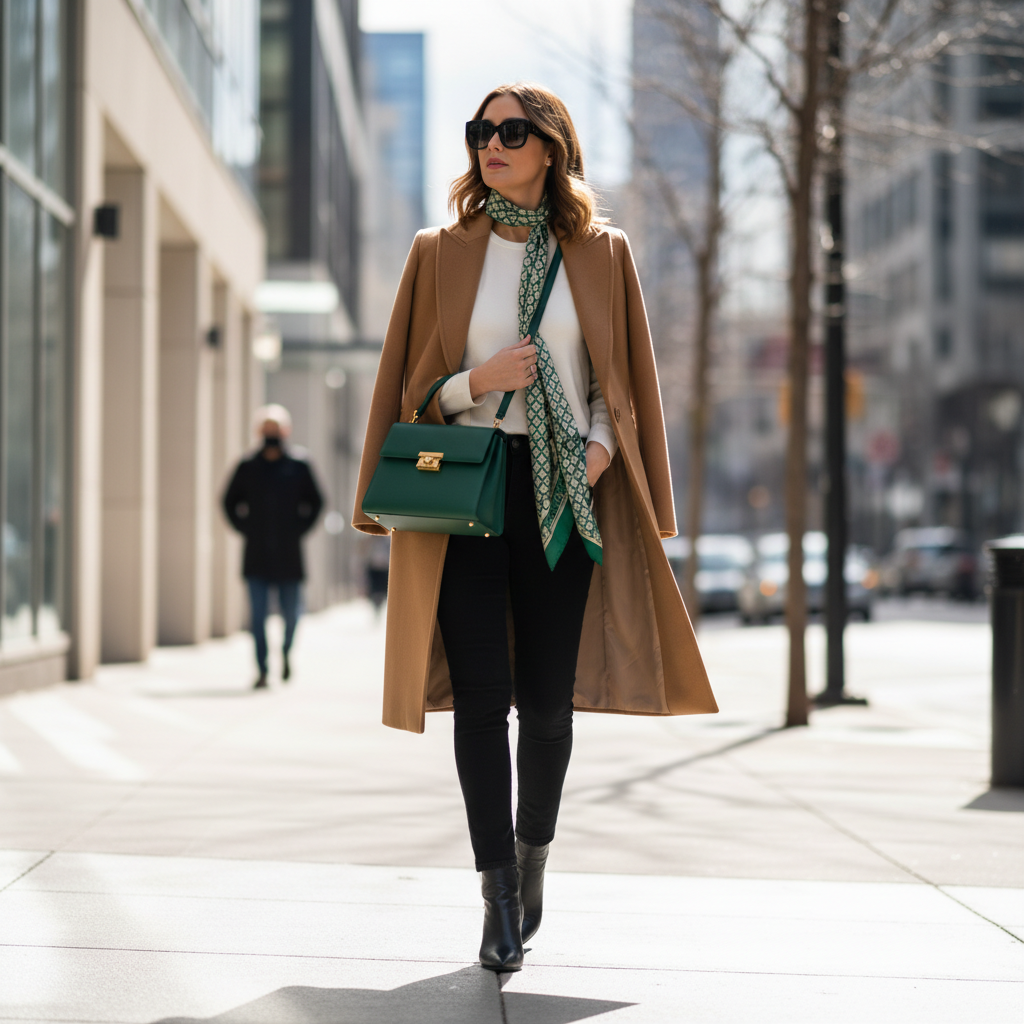
Try one of these formulas:
- Neutral base + one accent: Black/white/denim plus one color in either shoes or bag.
- Two-tone echo: Repeat a color already in your outfit (like navy pants) in a small accessory (belt, earrings, watch band).
- Print anchor: If you wear a print, pull one minor color from it and use that for a bag or shoe.
And if you feel stuck, use texture instead of color: a woven bag, suede shoe, or tortoiseshell sunglasses adds dimension without introducing a new shade.
Metals, hardware, and how to mix them so it looks intentional
People overthink “gold vs silver,” then default to nothing. In many closets, mixing metals looks more modern, but it works best when you set a clear anchor.
A simple approach to metals
- Pick a dominant metal (about 70% of visible metal): gold or silver.
- Add one bridging piece that already mixes metals (a watch, ring, or chain with two tones).
- Match your hardware family when possible: bag clasp, belt buckle, and jewelry don’t need to match perfectly, but they should feel in the same “temperature.”
According to GIA (Gemological Institute of America), different metals and finishes reflect light in distinct ways, which can change how jewelry reads against skin and clothing. In plain English, mixing finishes can be great, but if everything reflects differently, it can look chaotic.
A quick self-check: why your accessories feel “off”
Before you buy anything, run this short checklist. It usually points to the real issue faster than scrolling outfit inspo.
- Everything is “medium”: medium hoop, medium necklace, medium bag. Add one stronger point or go more minimal.
- No clear focal point: your eye doesn’t know where to land. Choose one hero piece.
- Too many competing textures: chunky knit, distressed denim, studded belt, heavy chain. Keep two textures, simplify the rest.
- Wrong scale: tiny jewelry with a dramatic coat, or huge earrings with a delicate slip dress. Adjust size to match outfit intensity.
- Vibe mismatch: sporty sneakers plus a very formal bag. It can work, but it needs a bridge item (like a relaxed blazer or minimal jewelry).
If you find yourself saying “I like each piece, just not together,” that’s almost always a balance or scale issue, not a style identity crisis.
Outfit formulas you can repeat (with a practical table)
These combinations are built for real schedules: workdays, errands, dinners, and travel. Use them as templates, then swap details based on your wardrobe.
Accessory pairing table
| Base Outfit | Best Accessory Focus | Easy Add-Ons | What to Avoid |
|---|---|---|---|
| White tee + jeans | Structured bag or standout shoe | Hoops, belt, sunglasses | Too many statement pieces at once |
| Blazer + tank + trousers | Watch + simple chain | Leather tote, minimal studs | Chunky necklace with high lapels |
| Little black dress | Earrings or clutch | Strappy heels, cuff bracelet | Over-stacking necklaces at the neckline |
| Maxi dress | Waist definition (belt) or bag | Sandals, pendant, bangles | Very stiff bag that fights the drape |
| Athleisure set | Sleek bag (crossbody) or sunglasses | Small hoops, cap | Formal jewelry that feels “event” |
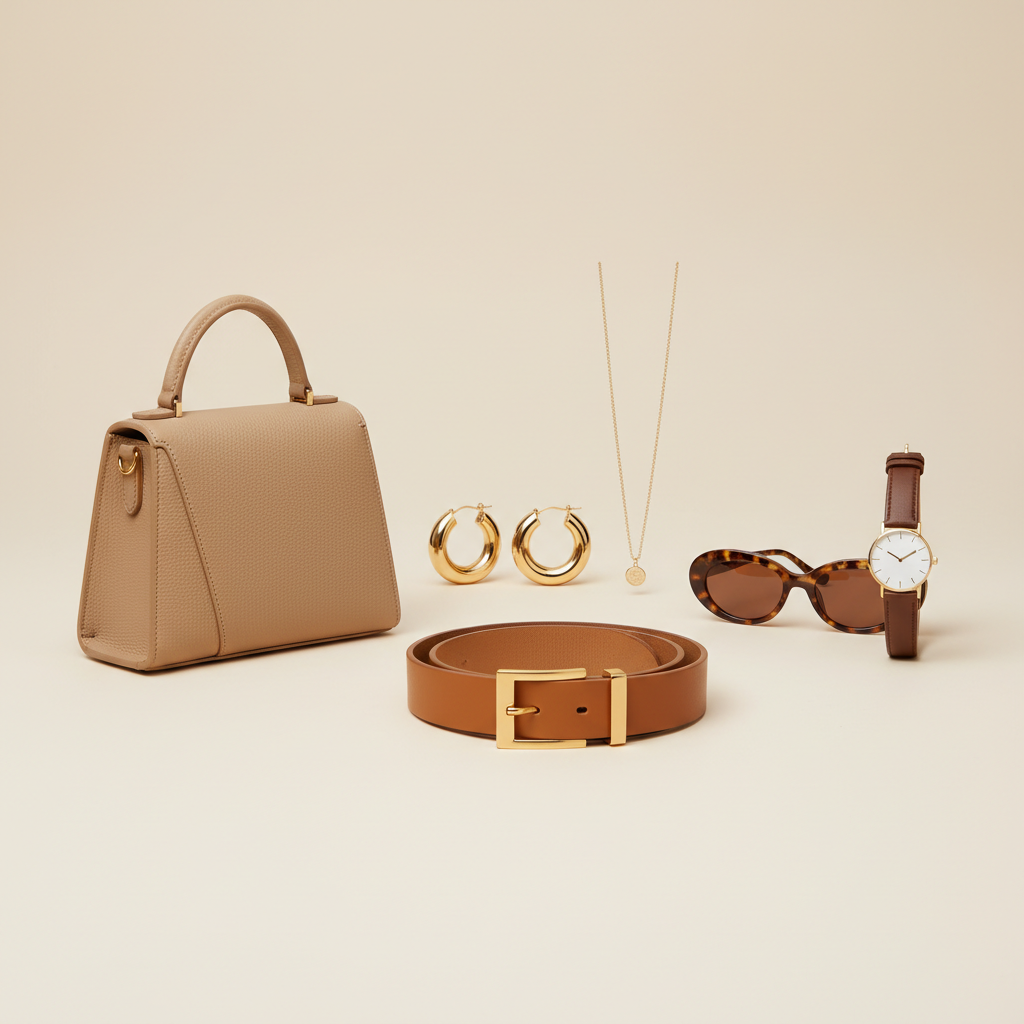
If you want consistency, create a mini accessory “capsule” you trust: one everyday hoop/stud, one chain, one watch, one belt, one bag shape, one go-to shoe. That set covers most outfits without mental effort.
Real-world steps: style accessories in under 3 minutes
Here’s a routine that fits mornings when you’re half-caffeinated and already late. It relies on decision order, not endless options.
- Step 1: Put on the outfit, then pause. Decide: do you want the vibe to be polished, relaxed, edgy, or romantic?
- Step 2: Choose one hero accessory that matches that vibe (shoes or bag is often easiest).
- Step 3: Add one “frame” item near the face (earrings or sunglasses). This is the fastest way to look finished on camera too.
- Step 4: Add one grounding item (belt or watch). If nothing needs grounding, stop here.
- Step 5: Do a mirror scan: if your eye bounces around, remove one item.
This is where accessories styling tips become actually usable: fewer choices, clearer order, less second-guessing.
Common mistakes that waste money (and how to avoid them)
Some “cute” accessories stay unworn because they don’t play well with your real wardrobe. Before buying, consider the outfits you wear weekly, not the life you imagine.
- Buying statement pieces with no supporting basics: dramatic earrings still need simple tops and clean necklines.
- Ignoring comfort: shoes you can’t walk in, earrings that irritate. If it hurts, it won’t get worn.
- Over-collecting trendy shapes: one trend item is fun, five becomes clutter fast.
- Forgetting proportion: petite frames often prefer smaller bags, but it depends on outfit volume more than height alone.
According to FTC guidance on jewelry marketing and labeling, consumers should pay attention to metal content and descriptions when buying. Translation: read product details, especially for plated pieces or skin sensitivity concerns, and if you have allergies, it may help to consult a dermatologist.
Key takeaways (save this for later)
- Pick one hero accessory, then let everything else support it.
- Balance beats matching: manage volume, shine, and scale.
- Repeat color once for a cohesive look without feeling “too coordinated.”
- Mix metals on purpose by choosing a dominant tone and a bridging piece.
- Use a 3-minute routine so your styling stays consistent on busy days.
Conclusion: a polished look is usually a small editing move
The best accessories styling tips don’t ask you to buy a whole new set of things, they ask you to choose a focal point, repeat one detail, and remove one distracting piece. That’s the “secret,” and it’s honestly more editing than decorating.
If you want a simple next step, pick three base outfits you wear all the time, then create one accessory combo for each. Put those combos on a note in your phone. It sounds almost too basic, but it’s the fastest path to looking consistently put-together.
FAQ
How do I choose accessories for a simple outfit without overdoing it?
Start with one hero item, usually shoes or a bag, then add one small piece near your face like earrings or sunglasses. If you add a third item, keep it functional, like a watch or belt.
Do my shoes and bag need to match?
Not usually. Matching can look polished, but it can also feel dated depending on the pieces. A better goal is coordinating by color family or formality level, like sporty with sporty, structured with structured.
What jewelry works best with high necklines?
High necklines often look cleaner with earrings, a watch, and maybe a bracelet. If you want a necklace, try a longer pendant that sits over the fabric, but keep the rest simpler.
Can I mix gold and silver jewelry?
Yes, and it often looks intentional when you choose a dominant metal and add one bridging piece that already combines tones. If the outfit is already busy, mixed metals may feel like extra noise, so simplify elsewhere.
How many accessories are “too many”?
It depends on scale and shine, not just the count. Four small minimal pieces can feel quieter than two oversized items. If your eye keeps jumping around in the mirror, remove one piece.
What are good accessories for work outfits in the US?
In many workplaces, simple jewelry, a structured bag, and clean shoes read professional without being loud. If your office is more casual, you can lean into texture like suede, leather, or tortoiseshell instead of sparkle.
How do I build an accessory capsule on a budget?
Buy basics you can wear weekly: small hoops or studs, a simple chain, a belt, one everyday bag shape, and sunglasses. Add one “fun” piece only after the basics earn their keep across multiple outfits.
If you’re trying to stop overthinking accessories and want a more repeatable system, it may help to audit your most-worn outfits and build two or three go-to combos around them, it’s a small setup step that tends to make daily dressing feel easier.