
Best hair clips for women trendy picks in 2026 come down to two things people care about in real life: they need to look current, and they need to actually hold your hair without snapping, sliding, or giving you a headache.
If you’ve ever bought a cute clip that only works for five minutes, you already know the pain point, trendy shapes don’t matter if the spring is weak, the teeth are too sharp, or the size doesn’t match your hair density.
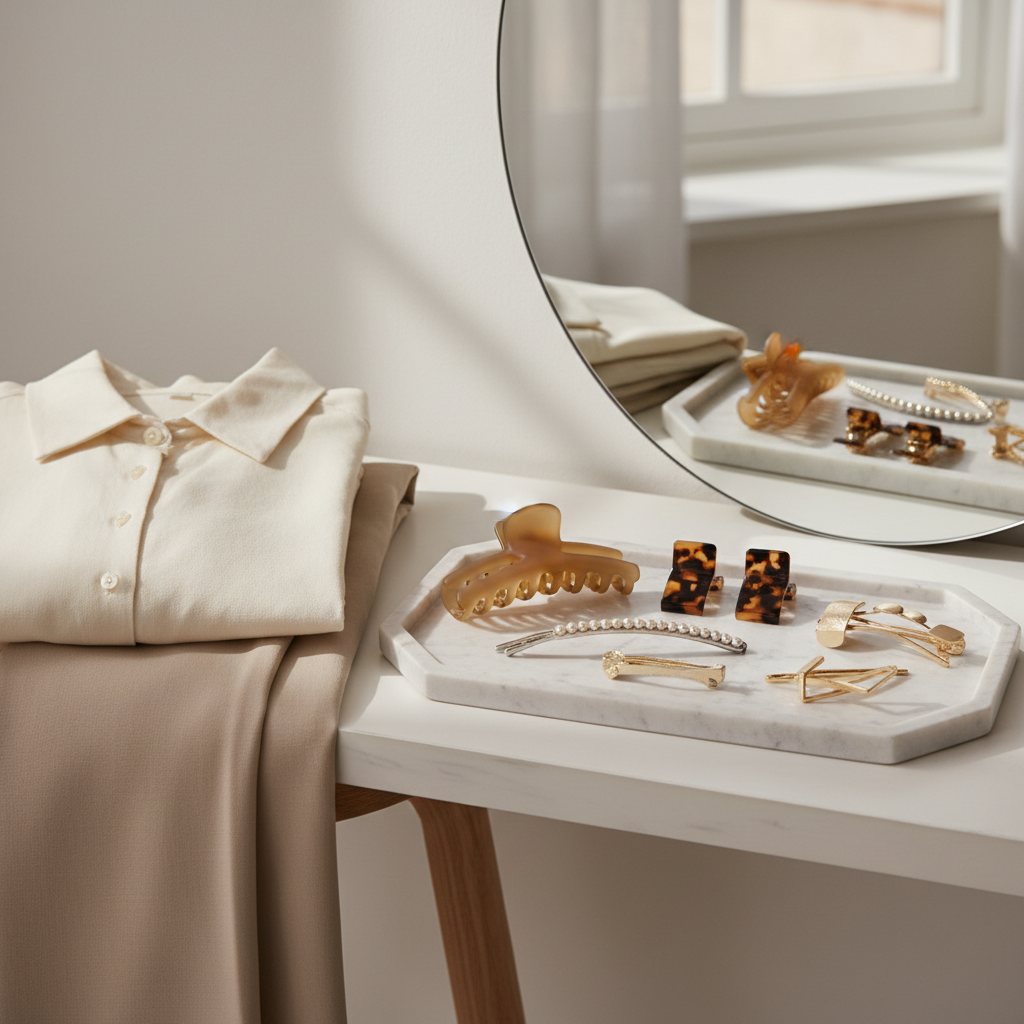
This guide keeps it practical, what styles are trending, which clip types suit different hair textures, and how to choose materials and sizes so your clip looks good and performs on busy days, not just in a product photo.
What’s actually trending in hair clips for 2026
Trends shift, but in 2026 the “it” clips tend to share a vibe: a little more polished, less costume-y, and easy to wear with everyday outfits.
- Sculptural claw clips with curved silhouettes, matte finishes, and neutral colors (taupe, espresso, slate).
- Metal barrettes that look like jewelry, smooth edges, minimal logos, warm gold and mixed metals.
- Oversized statement clips that still feel clean, like big acetate claws or wide French pins.
- Soft-touch finishes (rubberized or matte acetate) that reduce slipping, especially for fine hair.
- Textured classics like tortoiseshell, marbled resin, and subtle pearly sheen.
One small reality check, “trendy” can look different depending on your workplace and style, so it helps to pick one everyday clip and one fun clip rather than chasing every micro-trend.
Quick fit check: pick the right clip for your hair type
Before shopping, do a fast self-check. Most “this clip doesn’t work” complaints come from mismatching size and grip to hair density, not from the clip being universally bad.
Use this mini checklist
- Hair density: fine, medium, thick (how much hair you can gather in one hand).
- Texture: straight, wavy, curly, coily (affects slip and tension).
- Length: short/bob, shoulder length, long (affects leverage and weight).
- Scalp sensitivity: if you get headaches, you’ll want smoother teeth and lighter tension.
If you’re fine-haired and clips slide, prioritize smaller claws, matte finishes, and tighter springs. If you’re thick-haired and clips pop open, look for larger claws with a strong spring and wider teeth spacing so the clip doesn’t “fight” your hair.
The best trendy hair clip types (and when each one shines)
Instead of pretending there’s one winner, here’s the short list of clip types that dominate the best hair clips for women trendy conversation, with the scenarios where they earn their spot.
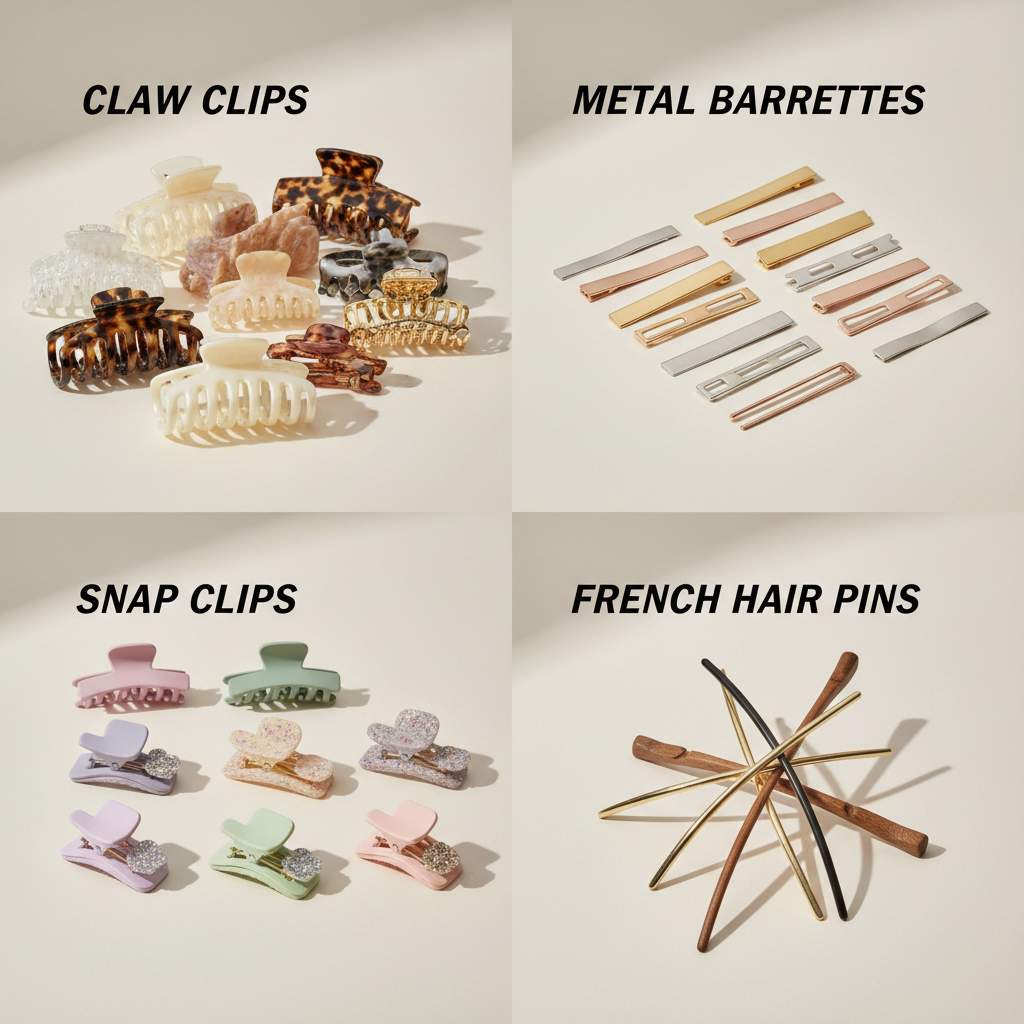
1) Claw clips (everyday workhorse)
- Best for: quick twists, half-up styles, off-the-neck looks.
- Choose if: you want comfort and speed more than precision.
- Watch for: overly sharp teeth, weak springs, glossy plastic that slips on fine hair.
2) Barrettes (polished, outfit-forward)
- Best for: side-sweeps, pinning bangs, sleek half-up styles.
- Choose if: you want a “finished” look for office, dinner, photos.
- Watch for: tiny clasps that don’t hold thick hair, or metal edges that snag.
3) Snap clips (the comeback basic)
- Best for: flyaways, face-framing pieces, stacking multiple clips.
- Choose if: you like playful styling without much commitment.
- Watch for: paint that chips, sharp inner edges, weak “snap.”
4) French pins and hair forks (minimal, chic, learning curve)
- Best for: low buns, quick knots, controlled messy buns.
- Choose if: you want a sleek look with less bulk than a claw clip.
- Watch for: smooth pins sliding in silky hair, it may take practice.
Materials and build quality: what matters more than brand names
When clips fail, it’s usually the material or hardware, not your styling skills. Here’s what tends to hold up.
- Acetate (cellulose acetate): often sturdier than cheap plastic, with richer color depth.
- Metal alloys: can look elevated, but edges and coating quality matter for snagging and tarnish.
- Springs and hinges: the “hidden” quality factor, a strong spring and aligned hinge keep claws from yawning open.
- Teeth design: rounded teeth feel better on the scalp, wider spacing can help thick hair grip without stress.
According to the American Academy of Dermatology Association, traction from tight hairstyles can contribute to hair breakage in some people, so if a clip forces tension or pulls at the hairline, switching to a gentler hold is usually a smarter move.
Practical buying guide: match clip size to real-life use
Most people buy clips by looks, then feel disappointed. Buying by use case is less fun, but it works.
| Use case | Clip type | What to look for | Common fail |
|---|---|---|---|
| All-day twist (work/school) | Medium-to-large claw | Strong spring, matte finish, rounded teeth | Clip slides or pops open |
| Half-up volume | Small claw or barrette | Lightweight, good grip on top layer | Crown collapses |
| Bangs / face framing | Snap clips | Smooth inner edges, firm snap | Snagging, bending |
| Low bun, minimal look | French pin / fork | Length appropriate to hair thickness, slightly textured finish | Pin slides out |
Key takeaway: if you want one versatile “trendy but useful” pick, a medium matte claw clip in a neutral tone usually covers the most situations, then add one metal barrette for dressed-up days.
How to style trendy hair clips without them slipping (simple steps)
This is the part people skip, but tiny tweaks can make even decent clips feel premium.
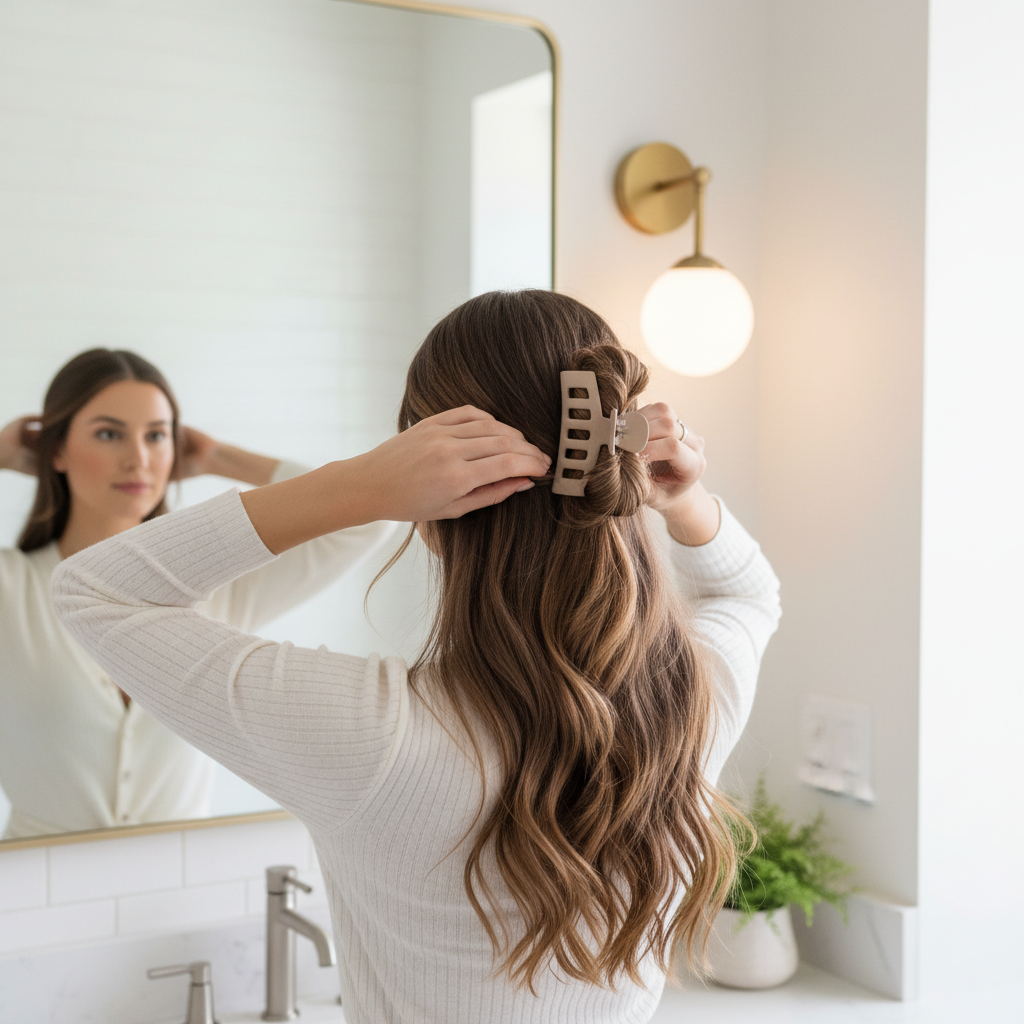
Claw clip twist that stays
- Gather hair like a low ponytail, twist upward until it forms a vertical roll.
- Fold the ends down if your hair is long, then clip over the roll, not just the surface.
- If you have fine hair, leave a little texture first, dry shampoo or texture spray often helps grip.
According to FDA guidance on cosmetics, products like hair sprays and styling aids should be used as directed on the label, so if you add grip products, avoid over-applying near sensitive scalp and stop if irritation shows up.
Barrette placement that looks intentional
- For a sleek side sweep, smooth hair with a brush, then place the barrette slightly above the ear.
- For half-up, secure only the top section, don’t try to cram all hair into a small clasp.
- If the barrette slips, cross two mini snaps underneath as “anchors,” then clip over them.
Mistakes that make even the cutest clips feel cheap
- Buying one size for every hairstyle: short hair and thick hair rarely share the same “perfect” clip.
- Ignoring finish: glossy clips can slide, matte or textured surfaces often grip better.
- Over-tight styling: more tension rarely equals more hold, it often equals discomfort and breakage risk.
- Not checking edges: rough seams and sharp metal corners cause snagging, especially on curly hair.
If a clip repeatedly pulls at your hairline or causes scalp pain, that’s not a “you” problem, it’s a mismatch. Rotate styles, reduce tension, and consider asking a stylist if you’re noticing breakage or thinning.
Conclusion: a smart 2026 hair-clip “capsule” you’ll actually use
If you want best hair clips for women trendy results without overthinking it, build a small mix: one medium matte claw for daily life, one dressy barrette for polished looks, plus a pair of snap clips for details and flyaways.
Pick your clips like you pick shoes, one that’s comfortable enough to wear all day, and one that makes the outfit feel finished. Then pay attention to spring strength, finish, and edge quality before you fall for color.
If you’re shopping this week, start by matching size to hair density, then choose a color palette you’ll wear often, neutrals for maximum mileage or one bold shade if your wardrobe is simple.
FAQ
- What are the most popular trendy hair clips for women in 2026?
Claw clips with sculptural shapes and matte neutrals, plus sleek metal barrettes, are the most wearable trends because they pair easily with everyday outfits. - Are claw clips bad for your hair?
They’re not automatically “bad,” but too much tension, sharp teeth, or repeated pulling in the same spot can contribute to breakage for some people, a gentler grip and rotating styles often helps. - How do I choose the right claw clip size?
Match it to density and length: fine hair usually needs smaller clips with tighter tension, thick or long hair often needs larger clips with strong springs and wider teeth. - Why do my hair clips keep sliding out?
Common causes include hair that’s very silky, a glossy clip finish, or clipping only the surface layer; adding light texture and clipping over a twisted “roll” usually improves hold. - What’s better: acetate or plastic hair clips?
Acetate often feels sturdier and looks richer than cheap plastic, but quality still varies, check the hinge alignment, spring strength, and smooth edges. - Do barrettes work on thick hair?
Yes, but many small barrettes are made for top sections only; for thick hair, look for wider clasps or use barrettes for half-up styles instead of trying to secure everything. - How many hair clips should I own?
A small “capsule” is usually enough: one daily claw, one nicer barrette, and a couple snap clips covers most needs without clutter.
If you’re shopping for a more streamlined routine, it helps to choose clips by hair type first and trend second, you’ll end up with fewer pieces that get worn more often, and less trial-and-error clutter in your drawer.