
Scarf styling ideas are one of the fastest ways to make an outfit feel intentional, even when you’re wearing the same jeans, tee, or blazer you always reach for. If scarves feel fussy, slide off your neck, or make you look “bundled up,” you’re not alone, the trick is matching the tie to your neckline, fabric, and the vibe you want.
Most scarf frustration comes from two things, proportion and placement. A bulky wrap on a high-neck sweater can feel like too much, while a tiny silk square on a chunky coat can look lost. Once you learn a few reliable moves, you stop “trying to style a scarf” and start using it like a tool to frame your face, add color, or define your waist.
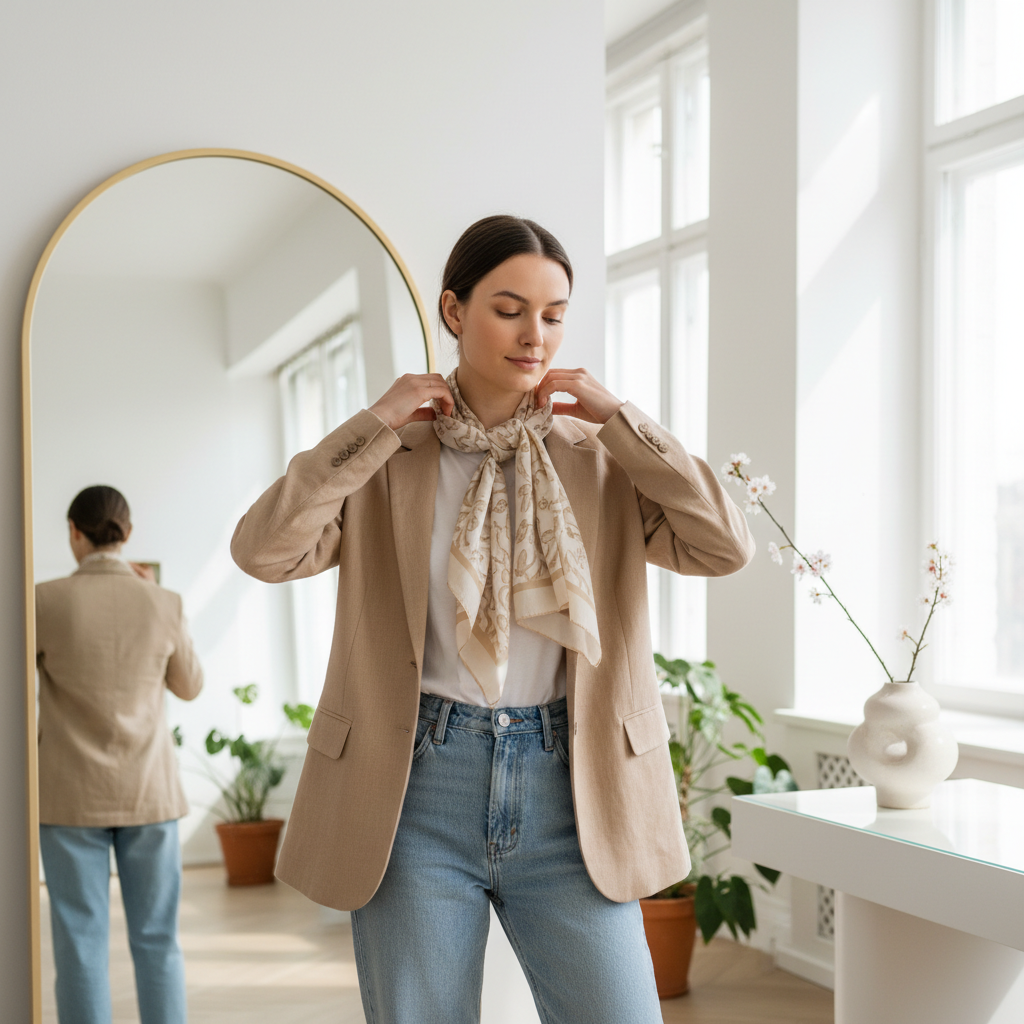
This guide focuses on simple, repeatable looks for real closets, casual days, office outfits, and going-out plans. You’ll also get a quick self-check, a table to pick the right scarf for the moment, and a few common mistakes that quietly ruin an otherwise good look.
Pick the right scarf first (it matters more than the knot)
Before you chase new scarf styling ideas, check the scarf itself. Size and fabric decide whether a style looks effortless or awkward, and they also affect comfort, slipping, and bulk.
- Silk or satin square: polished, great for neck ties, hair, and bag accents, can slip if tied too loosely.
- Lightweight woven (cotton, modal): easiest for everyday knots, good drape without heaviness.
- Wool or cashmere blend: best for warmth and structured wraps, can overwhelm petite frames if too thick.
- Skinny scarf or scarflette: subtle, great with blazers and button-downs, less warmth.
According to Good Housekeeping... scarves tend to look most flattering when the fabric weight matches the outfit weight, so a chunky scarf usually pairs better with heavier outerwear than with light knits.
A quick self-check: which scarf problem are you actually solving?
When people say scarves “don’t work on me,” it’s usually one of these. Identify your issue first, then choose the simplest fix.
- “It adds bulk to my chest.” Use thinner fabrics and smaller knots, keep ends longer and vertical.
- “It keeps slipping.” Tie a firmer base knot, or anchor with a brooch or a small hair elastic.
- “My outfit looks busy.” Choose a scarf that repeats one color already in your outfit, or go solid.
- “I look shorter.” Avoid big horizontal wraps, use long drapes to create vertical lines.
- “I want warmth, not drama.” Use one wrap plus a tuck, keep volume close to the neck.
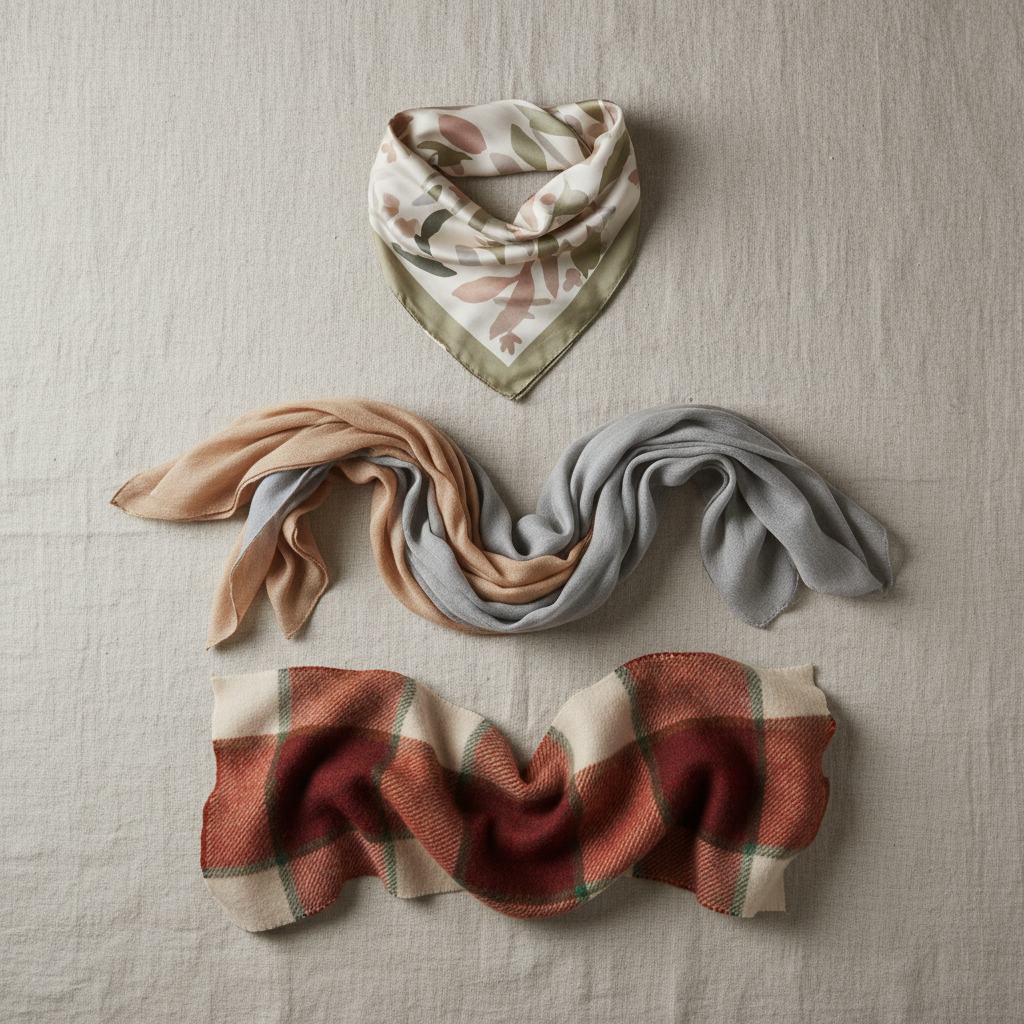
Key takeaway: if you want “easy,” pick a scarf that naturally drapes. Fighting stiff fabric with complex knots is where most attempts go sideways.
Everyday scarf styling ideas that work with most outfits
These are the “put it on and go” options. They work with tees, sweaters, denim jackets, and simple dresses without looking like you tried too hard.
1) The casual drape (no knot)
Fold a long scarf in half lengthwise, place it around your neck, let both ends hang evenly. Adjust so the ends form a clean vertical line down the front.
- Best for: open jackets, crewneck tees, long cardigans.
- Avoid if: you need hands-free movement in wind, it may shift.
2) The once-around wrap + tuck
Wrap the scarf once around your neck, bring both ends forward, then tuck the ends lightly under the wrap. This holds better than a loose drape and reads “intentional” fast.
- Best for: fall layers, errands, travel days.
- Tip: keep the wrap slightly loose so it frames the face, not compress the neck.
3) The simple overhand knot
Let the scarf hang, tie one easy overhand knot low at chest level, then loosen and slide the knot a bit so it sits relaxed, not tight.
- Best for: long scarves with medium weight.
- Looks great with: denim jacket, trench, blazer over tee.
These scarf styling ideas are “low risk” because the scarf stays in a familiar shape, vertical, clean, and easy to adjust as you move.
Work and polished looks: scarves that read professional, not costume-y
For office outfits, the goal is structure. Think smaller knots, controlled volume, and color choices that echo your blazer, blouse, or shoes.
1) The neck tie with a silk square
Fold a square into a slim band, wrap once around the neck, tie a small knot slightly off-center. This pairs well with a button-down, knit top, or a sheath dress.
- Proportion trick: on petite frames, keep the tails short.
- Comfort trick: if silk slips, add a tiny hidden pin at the back or under a collar.
2) The “ascot” tuck for button-downs
Fold a square into a band, cross ends, and tuck them into the shirt opening under the collar. It looks sharp without a big bow.
3) The blazer loop (long scarf)
Drape the scarf around your neck, then pull one end through the opposite side like a gentle loop, keep it slim and centered, then tuck ends under the lapels if you want it cleaner.
According to GQ... a scarf should complement tailoring rather than overwhelm it, so in professional settings, many people do better with lighter fabrics and tighter, simpler shapes.
Cold-weather and outerwear: warm without looking puffy
Winter is where you want warmth and balance. The “best” knot depends on your coat collar and how windy it gets where you live.
The coat-friendly wrap (secure and clean)
- Start with the scarf centered behind your neck.
- Cross ends in front once, bring them back around, then forward again.
- Tuck ends into the front layer so nothing flaps.
If you wear glasses or sensitive earrings, keep fabric away from the sides of your face, heavy friction can be annoying over a long day.
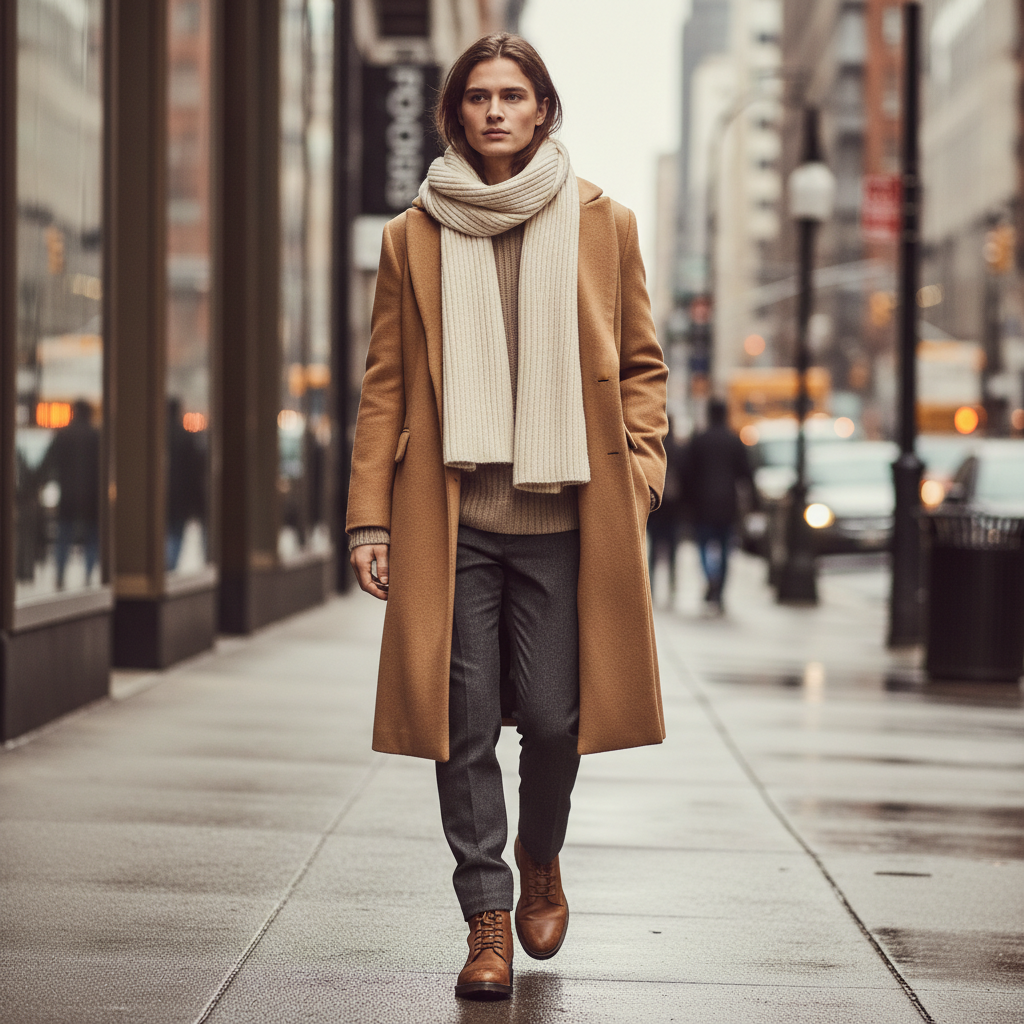
The “one-side longer” wind trick
Leave one end longer, wrap the long end around once, then let both ends fall. The wrap adds warmth, and the longer end prevents the scarf from riding up.
Safety note: if you commute by bike, scooter, or use machinery at work, keep scarf ends tucked in, loose ends can be a snag risk in some situations.
Use this table to match scarf type to outfit and goal
If you’re standing in front of a mirror thinking “which one,” this is the quick shortcut.
| Outfit situation | Scarf type | Go-to style | Why it works |
|---|---|---|---|
| Jeans + tee + sneakers | Lightweight woven | Once-around wrap + tuck | Adds shape without looking dressy |
| Blazer + trousers | Silk square | Neck tie (small knot) | Polished, controlled volume |
| Trench coat | Medium-weight long scarf | Simple overhand knot | Creates a clean vertical line |
| Puffer jacket | Wool/cashmere blend | Coat-friendly wrap (tucked) | Warmth without flapping ends |
| Little black dress | Silk/satin square | Shoulder drape or hair tie | Adds color, keeps neckline light |
Practical tips: make scarves look “styled” in under 60 seconds
These small habits make the difference between a scarf that feels random and one that reads like a choice.
- Match contrast on purpose: if your outfit is monochrome, pick a scarf with one clear accent color, if your outfit is already loud, go solid.
- Keep one focal point: either a bold scarf or bold earrings, not both if you want a cleaner look.
- Use the “mirror test”: step back and check the silhouette, if the scarf widens your upper body, loosen and lengthen the front line.
- Anchor slippery scarves: a tiny pin, scarf ring, or even a discreet hair elastic can stop constant re-tying.
- Don’t over-tighten: a scarf that sits too tight reads uncomfortable, and it tends to bunch fabric around the neck.
If you collect scarf styling ideas on Pinterest but never wear them, try choosing one “default” for casual days and one for work, repetition is what makes it feel easy.
Common mistakes that quietly ruin a good scarf look
- Too much bulk with a high neckline: turtlenecks plus thick scarves often compete, swap to a thinner scarf or wear it as a headband or bag tie instead.
- Ends cut your torso in half: if scarf ends stop at the widest part of your hips or bust, the proportions can feel off, adjust longer or shorter.
- Pattern clash without a “bridge” color: if your scarf pattern shares no color with your outfit, it can look pasted on, pick one element to repeat.
- Over-styling for the setting: a big bow might be cute, but in many everyday situations it can feel like costume, a smaller knot usually looks more modern.
When it’s worth getting help (or at least a second opinion)
If scarves always feel wrong despite trying multiple options, the issue may be your neckline mix, face shape framing, or sensitivity to certain fabrics. A quick consult with a personal stylist, or even a trusted friend with a good eye, can save you from buying five more scarves that repeat the same problem.
Also, if you have skin irritation around the neck, some fibers or finishes can trigger discomfort. In that case, swapping fabric and wash method helps, and if irritation persists, it’s reasonable to consult a healthcare professional.
Conclusion: keep it simple, then build variety
The easiest way to make scarves feel natural is to pick one everyday scarf, learn two dependable ties, and stop experimenting on rushed mornings. Once you have that baseline, adding a silk square for work or a warmer wrap for winter starts to feel fun instead of stressful.
If you want a quick next step, choose a scarf that matches the weight of your most-worn jacket, then practice the once-around wrap + tuck three times, it’s the style that tends to look good in real life and stays put.
FAQ
- What are the easiest scarf styling ideas for beginners?
Start with the casual drape and the once-around wrap + tuck. They’re forgiving, fast, and don’t require perfect symmetry to look good. - How do I keep a silk scarf from slipping?
Tie a smaller, firmer knot and keep it closer to the neck, not loose at the collarbone. If it still moves, a tiny hidden pin under a collar or a scarf ring can help without looking obvious. - Which scarf looks best with a blazer?
A silk square folded into a band or a skinny scarf usually reads sharp with tailoring. Thick knits can work too, but they often look better with relaxed blazers rather than structured suiting. - How do I wear a scarf without looking bulky?
Choose a lighter fabric, avoid multiple wraps, and keep the ends vertical. In many cases, one wrap plus a tuck gives warmth while keeping a clean line. - Can I wear scarves in warm weather?
Yes, but keep it light and small. A silk square at the neck, in hair, or tied to a bag gives the style payoff without heat buildup. - How do I style a scarf with a hoodie?
Use a medium-length scarf and do a simple overhand knot or a loose drape under an open coat. Bulky wraps over the hood can feel crowded, so keep volume minimal. - What scarf length should I buy?
For most adults, a long scarf that allows at least one wrap tends to be the most versatile. If you’re petite or dislike long ends, a medium length or a square scarf can feel easier day to day.
If you’re building a small scarf lineup and want it to cover casual, work, and cold-weather outfits without overthinking, it helps to start with one neutral woven scarf plus one silk square, then add a warmer option once you know what you actually reach for.