
Layering outfits winter works best when you treat it like a system, not a pile of sweaters, you build warmth in thin steps, keep moisture off skin, and finish with a shell that blocks wind.
If winter dressing usually leaves you either freezing outside or overheating indoors, the issue is rarely “not enough clothes”, it’s usually the wrong layers in the wrong order, or fabrics that trap sweat and then chill you later.
This guide keeps it practical, you’ll get a simple framework, fabric choices that matter, outfit formulas you can repeat, and a quick checklist to troubleshoot why your current winter outfits feel awkward or bulky.
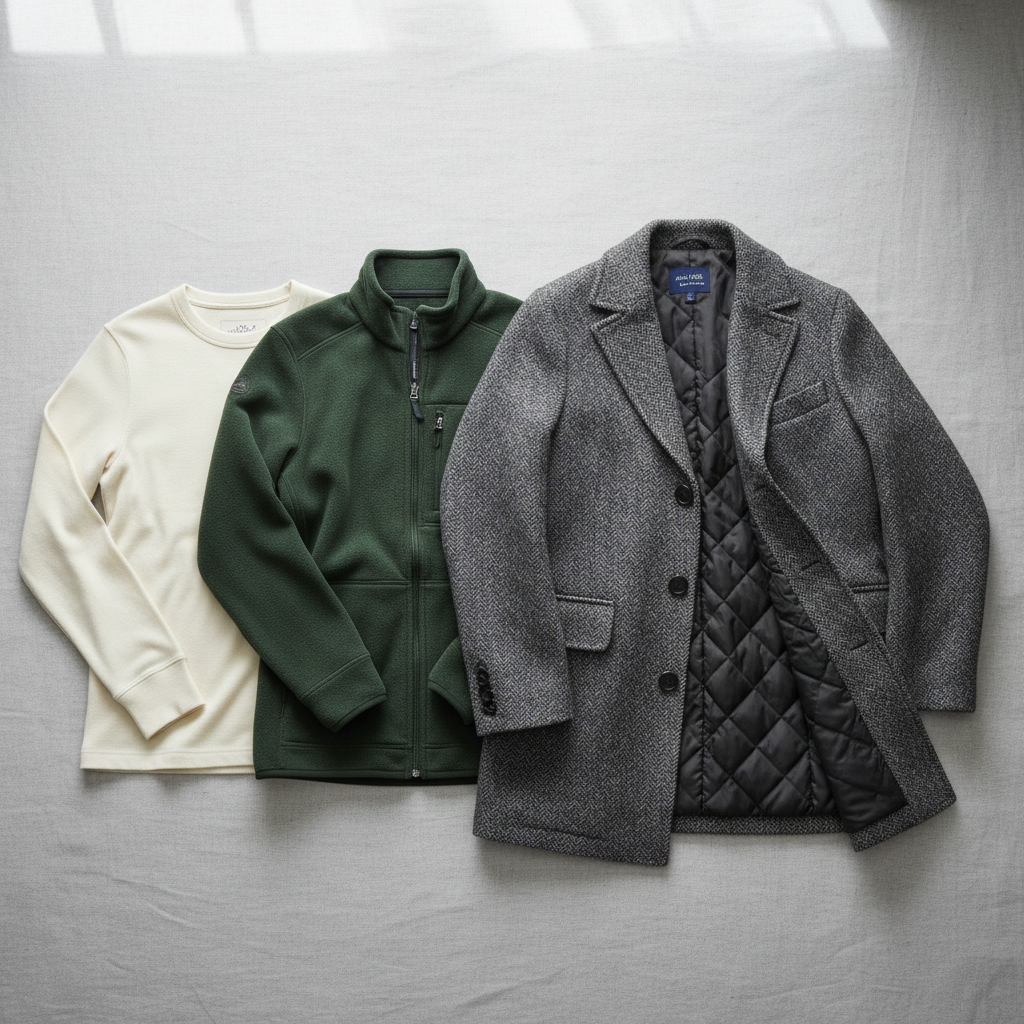
Why winter layers fail (and what usually fixes it)
Most “I can’t get warm” or “I look puffy” complaints come down to a few repeat offenders, and once you spot yours, the fix is straightforward.
- Too much cotton next to skin, cotton absorbs moisture and dries slowly, so you can feel clammy, then cold.
- One huge insulating piece instead of two moderate ones, a single thick sweater can restrict movement and still leak heat at the neck and waist.
- No wind protection, insulation without a wind-blocking outer layer often underperforms on gusty days.
- Neck, wrists, ankles left open, tiny gaps dump heat fast, especially when you walk outside then stand still.
- Wrong size mixing, if every layer is slim-fit, you compress insulation, if every layer is oversized, you look bulky and lose shape.
According to CDC guidance on cold exposure, wind and wet clothing can increase heat loss, so staying dry and blocking wind are key parts of staying warm.
A simple 3-layer framework that stays warm and looks clean
When layering outfits winter, you’re aiming for three jobs: manage moisture, trap warmth, and block the elements, you can do that without looking like you’re heading to Everest.
1) Base layer: keep skin dry
Pick a close-to-body layer that moves sweat away, merino wool or synthetic performance knits usually work well, especially if you run cold after walking a few blocks.
- Best for: commuting, errands, outdoor events.
- Look tip: a smooth base prevents bunching under knits and makes everything sit better.
2) Mid layer: your adjustable warmth
This is the layer you’ll remove indoors, think fine-gauge wool sweater, fleece, quilted liner, or a cardigan that keeps shape.
- Best for: adding warmth without adding bulk.
- Look tip: choose one “structured” mid layer (a crisp knit, a shacket, a blazer-style cardigan) so the outfit reads intentional.
3) Outer layer: wind and weather control
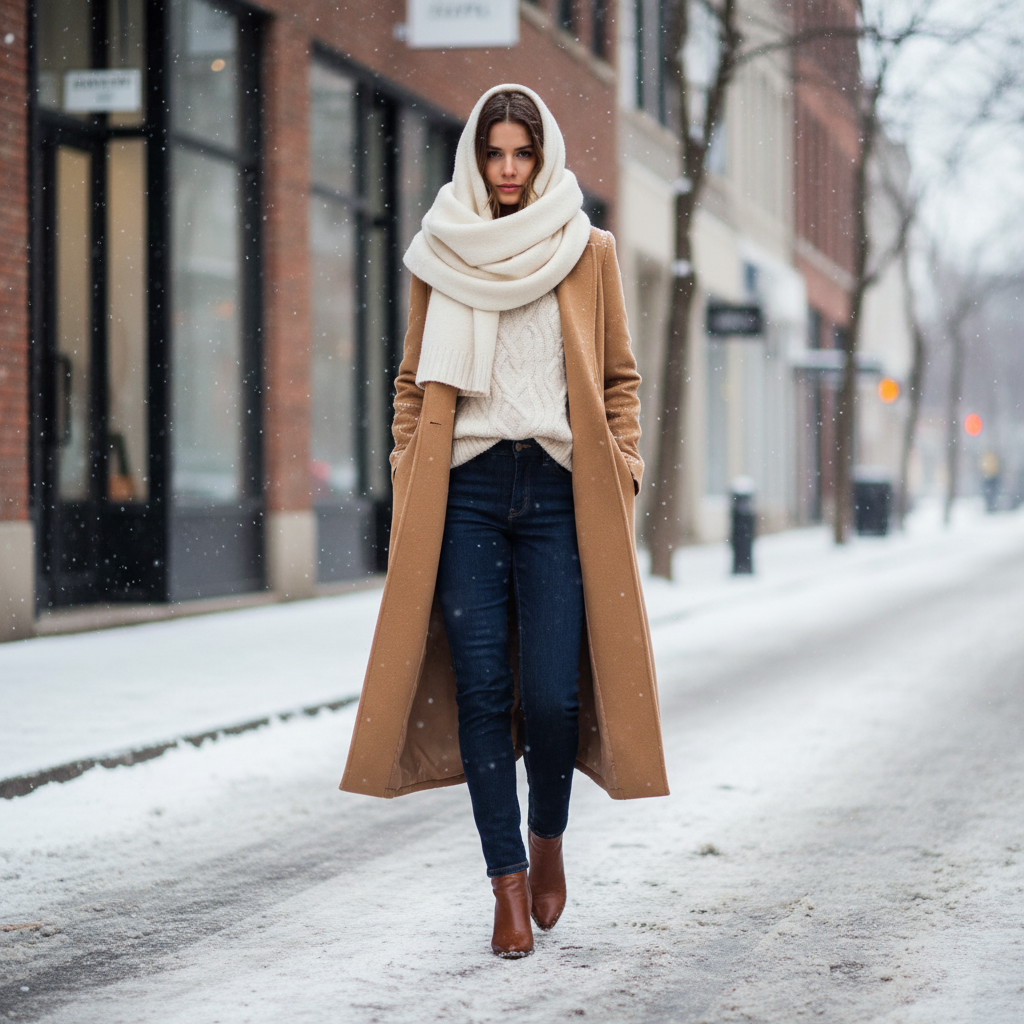
A coat that blocks wind does more than people expect, for many city winters, a wool coat plus smart mid layer feels warmer than a fashionable but drafty jacket.
- Best for: wind, light rain or snow (depending on fabric).
- Look tip: longer outerwear instantly streamlines proportions and makes layered outfits look sharper.
Fabric choices that matter more than “more layers”
Warmth is partly about trapped air, but comfort is about staying dry, the right fabric mix prevents that hot-then-cold cycle.
- Merino wool: warm even when slightly damp, less “plasticky” feel, often great for base and mid layers.
- Fleece: lightweight warmth, dries fast, can look casual, so pair with a cleaner outer layer if you want polish.
- Down or synthetic insulation: high warmth-to-weight, great for very cold areas, but can overheat indoors.
- Wool coats: strong style payoff, decent warmth, pair with a wind-resistant scarf or an inner liner when it’s windy.
- Cotton: fine for dry, mild cold days, less ideal when you sweat or face wet snow.
If you’re often outdoors for long stretches, consider fabrics that still insulate when damp, and if you have circulation issues or medical concerns, it’s smart to ask a clinician for personalized advice.
Quick self-check: what type of winter layerer are you?
Use this to diagnose the real issue before you buy anything, most fixes are styling or swapping one layer.
- You’re cold but sweating: base layer likely too absorbent, or mid layer too warm for your activity level.
- You feel warm until wind hits: outer layer lacks wind protection, or you need better neck/wrist sealing.
- You look bulky in photos: too many thick knits at once, or outerwear too short and boxy.
- You freeze at your desk: you may need an “indoor mid layer” you can keep on comfortably, like a thin merino cardigan.
- You hate the feeling of layers: fabrics may be itchy or stiff, or sizing is too tight, causing bunching and pressure points.
Key takeaway: you don’t need five layers, you need the right three, sized correctly, with the right fabric next to skin.
Outfit formulas you can repeat (work, weekend, and very cold days)
These are mix-and-match templates, the goal is fewer decisions and more outfits that “just work”, even when you’re rushing out the door.
Formula A: polished workday (warm, not fussy)
- Base: thin merino top
- Mid: fine-gauge wool crewneck or turtleneck
- Outer: tailored wool coat (mid-thigh or longer)
- Finish: leather gloves + scarf that seals the neckline
Formula B: casual weekend (comfortable, still put-together)
- Base: thermal long-sleeve
- Mid: fleece or cardigan
- Outer: parka or insulated jacket
- Finish: beanie + thicker socks + boots
Formula C: cold-and-windy day (more protection, same silhouette)
- Base: merino base layer
- Mid: sweater + lightweight insulated liner (two thinner mids)
- Outer: wind-resistant shell or parka
- Finish: neck gaiter or scarf tucked in, cuffs covered
When you build layering outfits winter this way, your clothing works like adjustable temperature control, you add or remove one piece without breaking the look.
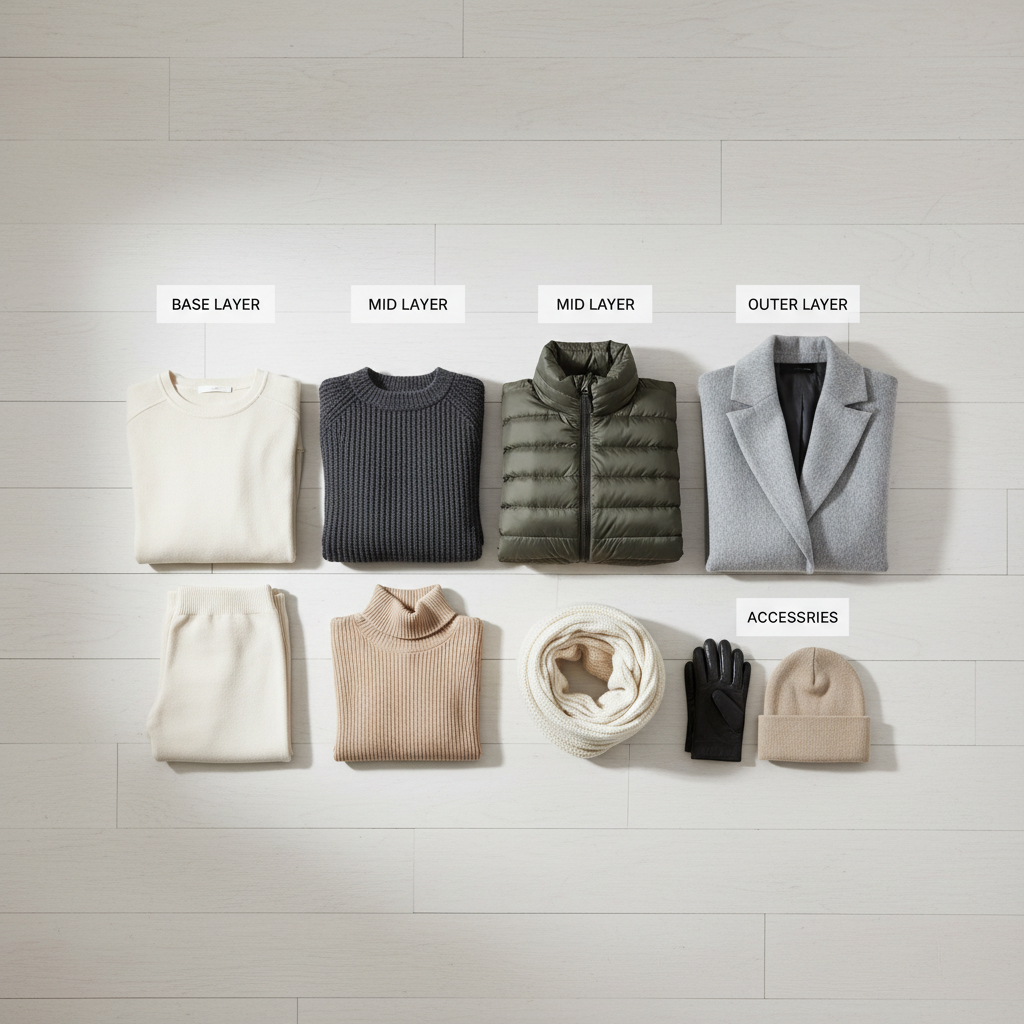
Practical layering guide by temperature (use this table)
Everyone’s cold tolerance differs, but this gives you a reliable starting point, adjust one layer up or down based on wind, activity, and how long you’ll stay outside.
| Conditions | Base | Mid | Outer | Accessories |
|---|---|---|---|---|
| 40–50°F, dry | Light knit tee or thin long-sleeve | Cardigan or light sweater | Wool coat or denim jacket | Light scarf optional |
| 25–40°F, typical city winter | Merino or thermal top | Wool sweater or fleece | Wool coat or insulated jacket | Scarf + gloves |
| 10–25°F, windy | Merino base layer | Sweater + thin insulated liner | Parka or wind-resistant shell | Beanie + warm socks + neck coverage |
| Below 10°F, long time outdoors | Warm base + leggings | Insulated mid layer | Heavy parka | Full set: hat, scarf/gaiter, gloves, insulated boots |
Common mistakes that make you colder or less stylish
Some winter style advice looks great online and fails in real life, especially if you commute, take public transit, or go in and out of heated buildings all day.
- Wearing all chunky pieces together, chunky sweater plus chunky scarf plus bulky puffer usually adds volume fast, pick one statement texture and keep the others smoother.
- Ignoring ventilation, if you overheat, you sweat, then you chill, look for zips, buttons, or layers that come off easily.
- Buying outerwear too small, you need room for a mid layer without compressing it, size for the layers you actually wear.
- Leaving shoes as an afterthought, cold feet can ruin an otherwise warm outfit, thicker socks and insulated or wind-blocking footwear often matter more than one extra top layer.
Also, if you’re driving most places, you may not need the same outer layer as someone walking and waiting outside, that mismatch is why some “perfect” winter outfits feel wrong.
When it’s worth getting expert help
If you regularly feel unusually cold compared with others, or you notice numbness, color changes in fingers or toes, or symptoms that concern you, it’s reasonable to check in with a healthcare professional, especially if you have conditions that affect circulation.
On the style side, if you’ve bought multiple coats and still dislike how they fit, a tailor or personal stylist can be a smart, contained investment, hemming sleeves, adjusting waist shaping, or swapping buttons can change how layered outfits read without rebuilding your closet.
Conclusion: keep the layers, lose the guesswork
Warm winter style gets easier when you stop chasing random outfit ideas and start repeating a small set of layer combos, a moisture-managing base, a flexible mid layer, and an outer layer that handles wind will carry most days.
If you do one thing this week, run a quick audit: replace the next-to-skin cotton on your coldest days, and tighten the “gaps” with a better scarf and gloves, those two changes often make layering outfits winter feel dramatically more comfortable without changing your personal style.
FAQ
What are the best layering outfits winter for someone who overheats indoors?
Prioritize a thin base plus a mid layer you can remove quickly, like a cardigan or a zip fleece, and keep the outer layer easy to open, the goal is fast venting, not maximum insulation.
How do I layer without looking bulky?
Use thinner fabrics for the first two layers, then choose a longer, structured coat, and keep only one item chunky, usually the sweater or the scarf, not both.
Is a wool coat warm enough for real winter?
In many city conditions, yes, especially with a good mid layer and neck coverage, but if it’s windy, wet, or you’ll be outside a long time, a wind-resistant outer layer may feel warmer.
What should the base layer be made of?
Merino wool and synthetic performance fabrics are common choices because they manage moisture better than cotton, if your skin is sensitive, look for softer weaves and avoid scratchy knits.
How many layers do I actually need?
Often three is enough, base, mid, outer, then accessories, if you keep adding layers and still feel cold, the missing piece may be wind protection or better coverage at wrists and neck.
How do I layer for winter travel when I can’t pack much?
Pack one base that dries fast, two mids with different warmth levels, and one versatile outer layer, then rotate accessories, scarves and hats take little space and change the feel of outfits.
Can I wear leggings under jeans for extra warmth?
Many people do, especially on very cold days, just watch for restricted movement and overheating indoors, and choose a smooth base so the denim doesn’t feel tight.
If you’re building a small winter wardrobe and want a more “no-thought” approach, start by choosing one reliable base layer, one polished mid layer, and one outer layer that fits over both, then repeat two or three color palettes so everything mixes easily.