
Down coat warm style is really about balancing insulation with shape, so you stay comfortable without feeling bulky or underdressed. If you’ve ever put on a puffer and felt like your outfit disappeared, you’re not alone, it happens fast in winter.
The good news is you don’t need a closet overhaul. A few smart choices in coat length, layering, and accessories can make a down coat look intentional, even when the weather is rude and you’re just trying to get through your commute.
Below, I’ll break down what actually affects warmth and silhouette, share outfit formulas you can copy, and call out the common “looks cute online, fails in real life” mistakes.
What makes a down coat look stylish (not just warm)
Start with one honest idea, the coat is the outfit in winter. Everything else either supports it, or fights it. Most styling problems come from proportions and clutter, not from the coat itself.
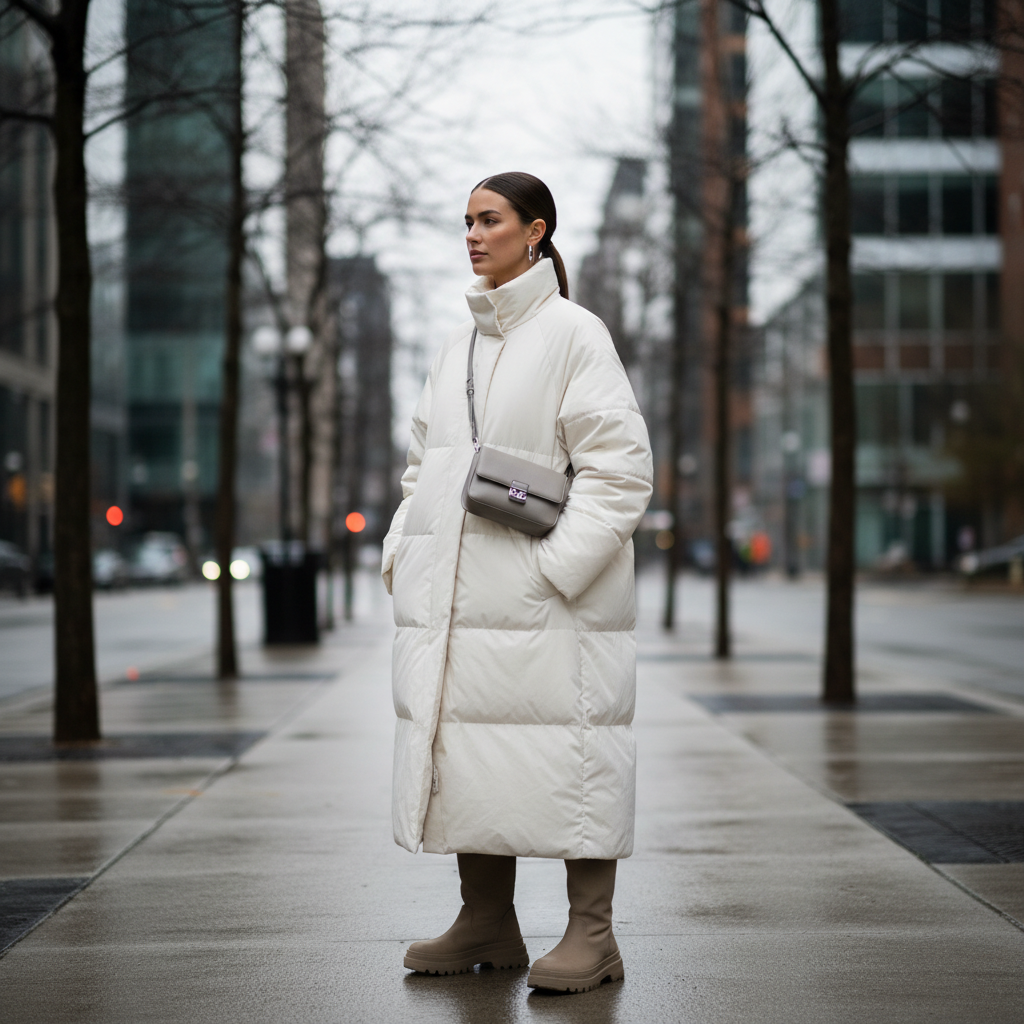
Proportion is the big lever. A mid-thigh puffer paired with a slim pant usually reads sleek, while a cropped puffer with a wide-leg pant can work too, but only if you keep the layers tidy.
Color strategy matters more than people expect. Winter outfits look sharper when you cap your palette at two to three tones, for example black and cream, or navy and charcoal with one warm accent like camel.
Texture is the quiet upgrade. A matte down coat tends to look more refined than high-shine, and pairing it with wool, denim, or leather keeps it from feeling like gym gear.
Quick self-check: which down coat situation are you in?
This is a fast way to diagnose why your outfit feels off, and what to fix first. Pick the closest match, then jump to the solutions section.
- I’m warm but look puffy, the coat overwhelms my frame.
- I look fine but feel cold, wind and drafts get through.
- My outfits feel messy, too many layers, no clear silhouette.
- I can’t dress it up, my down coat only works casually.
- I overheat indoors, errands and commuting make me sweaty.
According to NOAA (National Weather Service), wind chill can make cold air feel significantly colder on exposed skin, so “warm enough” often depends on wind blocking and coverage, not only how thick your coat feels.
Outfit formulas you can copy (by coat length)
Instead of reinventing outfits daily, use a repeatable formula. Change one piece, keep the rest stable, and your down coat warm style stays consistent all season.
Cropped puffer (hits at waist or high hip)
- Top: fitted turtleneck or thin merino sweater
- Bottom: high-rise straight jeans or wide-leg trousers
- Shoes: chunky boots or clean sneakers (dry days)
- Why it works: long leg line + short coat keeps you from looking “all coat”
Mid-length puffer (mid-hip to mid-thigh)
- Top: sweater + slim base layer underneath if needed
- Bottom: leggings with a polished finish, straight jeans, or slim trousers
- Shoes: Chelsea boots, winter hikers, or lug-sole boots
- Why it works: easiest to balance, very forgiving for real-life errands
Long down coat (knee to calf)
- Top: lightweight knit, avoid thick hoodies unless it’s a deliberate sporty look
- Bottom: any silhouette, but keep one line clean (either top or bottom)
- Shoes: tall boots for polish, waterproof boots for slush
- Why it works: long vertical line, often looks more “put together” by default
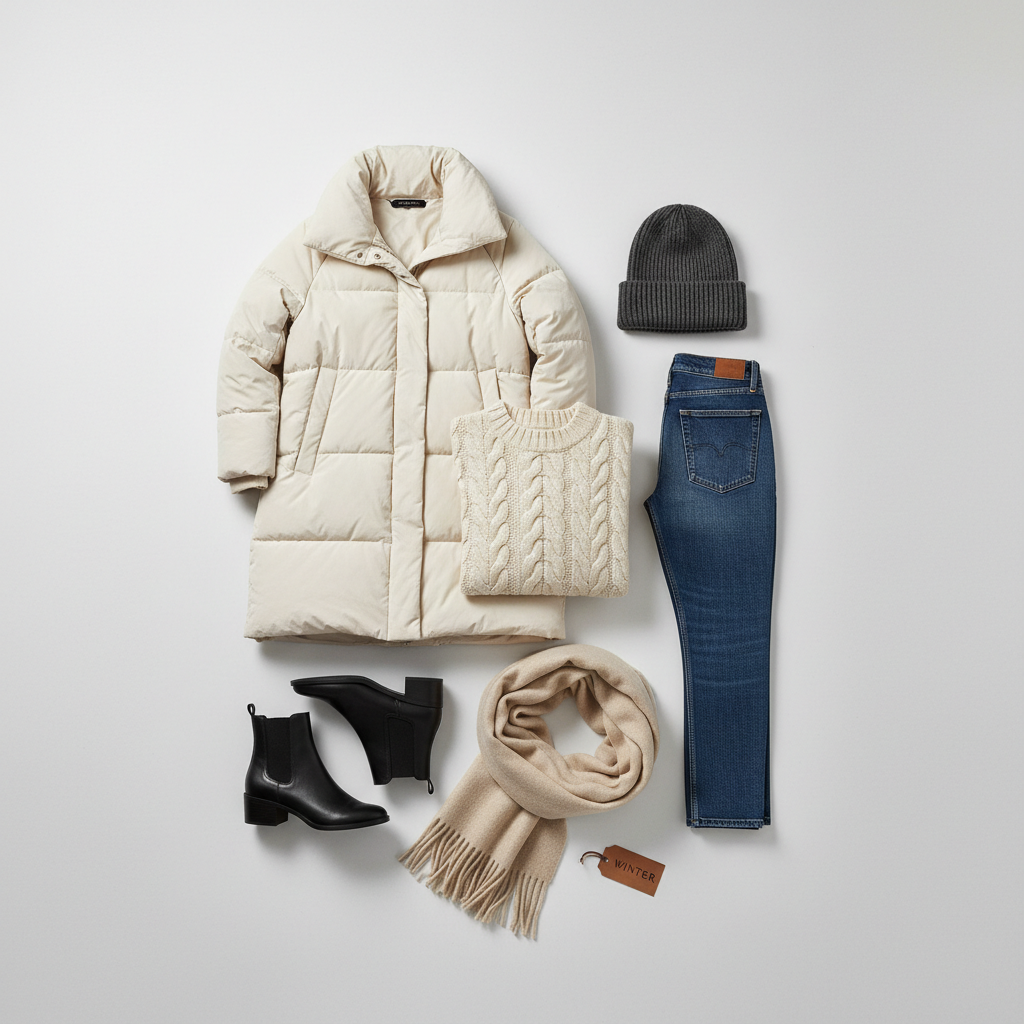
If you’re trying to look a bit sharper for work, long coats tend to read more “outerwear as tailoring,” while short puffers read more sporty. That’s not a rule, but it’s a helpful shortcut.
Warmth without bulk: layering that still looks clean
The secret is thin, efficient layers that don’t bunch at the neck, wrists, and waist. Bulk usually comes from stacking medium-thick items instead of using one good base layer.
- Base layer: a thin thermal or merino top when temps drop, it adds warmth without changing your silhouette.
- Mid layer: one sweater or fleece, not two, unless you size up intentionally.
- Outer layer: the down coat does the insulation heavy lifting, your job is to reduce drafts.
Small details matter, like keeping your mid layer sleeves smooth so the coat glides on, and choosing a scarf that sits flat rather than creating a thick “collar mound.”
Accessories that make a down coat outfit feel intentional
In winter, accessories aren’t just decoration, they’re function. When they match the coat’s vibe, your outfit stops looking accidental.
- Beanie vs. structured hat: a ribbed beanie reads casual, a wool cap or beret reads dressier, pick one direction.
- Scarf scale: chunkier scarf with a slim coat, flatter scarf with a very puffy coat.
- Gloves: leather gloves instantly elevate even a basic puffer, knit gloves feel relaxed.
- Bag: a structured tote or crossbody adds polish, a backpack leans sporty.
A practical guide: match your down coat to the day (table)
If you want fewer “wrong coat” days, think in scenarios, not just temperature. This is where down coat warm style becomes genuinely useful.
| Scenario | Coat choice | What to wear with it | One detail that helps |
|---|---|---|---|
| Commute + lots of walking | Mid-length with hood | Slim pants + grippy boots | Wind-blocking scarf tucked in |
| Office + dinner | Long, matte finish | Knit dress or trousers + tall boots | Leather gloves for polish |
| Weekend errands | Cropped or mid-length | Jeans + sweater + sneakers/boots | Capsule colors (2–3 tones) |
| Wet snow / slush | Water-resistant shell | Dark bottoms + waterproof boots | Hem that doesn’t drag |
Common mistakes (and what to do instead)
Most “this looks weird” moments come from a few repeat offenders. Fixing them is usually easier than buying a new coat.
- Mistake: too much volume everywhere. Try one streamlined piece, slim pants or a fitted knit, so the coat can be the only big shape.
- Mistake: shiny coat + shiny leggings. Swap one item to matte or textured, denim, wool, or a brushed knit.
- Mistake: scarf fighting the hood. Use a thinner scarf, or skip the hood when it’s dry and you want a cleaner neckline.
- Mistake: “warm” but drafty at the bottom. Longer hem or layering with a longer top can reduce that cold air gap.
- Mistake: overdressing indoors. Choose a breathable mid layer and rely on the coat outside, you can also vent with a two-way zipper if your coat has one.
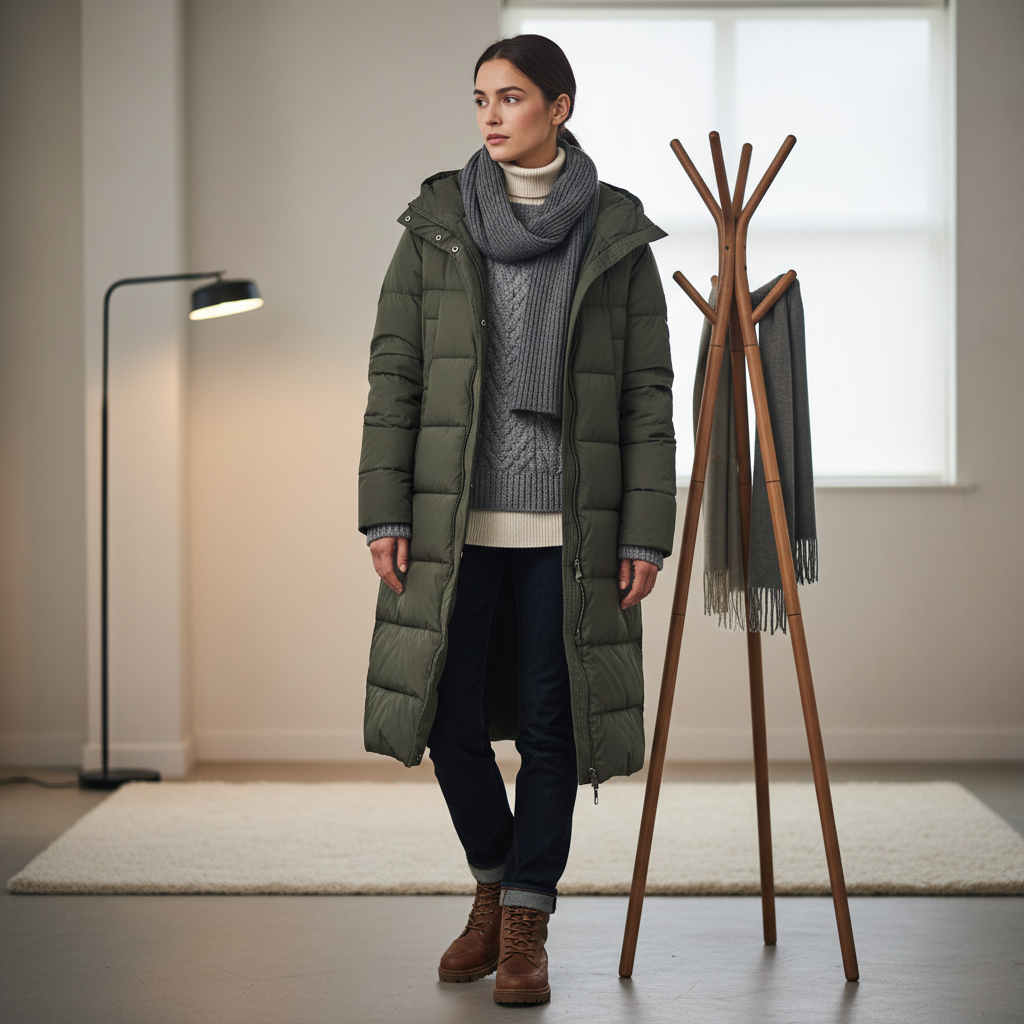
One more thing people rarely mention, if your coat fits too tight at the hips or shoulders, styling won’t fully save it. Movement matters, a warm coat you avoid wearing ends up being the least stylish option.
When it’s worth asking a pro (tailor or stylist)
If you feel stuck, a small adjustment can change everything. A tailor can sometimes improve sleeve length, replace a zipper, or tweak snaps, but altering a down coat can be tricky because of baffles and insulation, so ask what’s realistic before committing.
For styling help, a personal stylist or even a good department store associate can be useful if you’re trying to build a small winter capsule. If you have sensory issues with bulk or overheating, it may help to consult a professional for fabric choices that feel comfortable in your daily routine.
Conclusion: a warm down coat outfit can still look like “you”
If you only change two things, make them these, pick a clear silhouette (one volume piece at a time) and keep your color story tight. Once those are consistent, the rest feels easy, and your down coat warm style looks purposeful whether you’re walking to work or running errands.
Key takeaways:
- Let the coat lead, build the outfit to support its length and volume.
- Use thin warmth, base layers and wind-blocking details beat random bulky stacking.
- Accessories finish the job, especially gloves, scarf scale, and boots.
Pick one outfit formula from above, try it twice this week, then adjust just one variable at a time, that’s the fastest way to land on a winter uniform you actually like wearing.
FAQ
How do I style a down coat without looking bulky?
Keep one clean line somewhere, either slim pants with a mid-length puffer, or a long coat with a smoother top layer. Bulk usually comes from stacking thick items in multiple zones.
What shoes look best with a long down coat in winter?
Tall boots read polished and keep legs warm, while waterproof ankle boots are more practical for slush. If the coat is very long, a chunkier sole helps balance the visual weight.
Can a down coat be business casual?
Often yes, especially a long, matte coat in a neutral color. Pair it with trousers, a structured bag, and cleaner accessories, and skip overly sporty elements like bright trainers.
Is a cropped puffer warm enough for real winter?
It can be, but it depends on wind, humidity, and how long you’re outside. If your lower back or hips get cold, add a longer mid layer or switch to mid-length for longer outdoor time.
How do I layer for warmth without overheating indoors?
Use a thinner base layer and a breathable mid layer, then let the coat provide most of the warmth outside. When you’re inside, unzipping or removing one layer usually works better than wearing heavy knits all day.
What colors are easiest for a down coat capsule wardrobe?
Black, navy, charcoal, and camel are common “work with everything” options, but the best choice is what matches your daily shoes and bag. Keeping a two-to-three color palette makes outfits feel more styled.
Are hooded down coats less stylish?
Not automatically. A hood can look sporty, but it’s also genuinely practical in wind and light snow. If you want a cleaner look, choose a hood with a structured shape or a removable design.
How do I know if my down coat is the wrong size?
If you can’t comfortably lift your arms, zip without pulling at the hips, or wear a light sweater underneath, it may be too small. If you feel swallowed and the shoulders sag far past your natural shoulder line, it may be too big.
If you’re trying to build a winter rotation around one coat and want fewer “I have nothing to wear” mornings, it can help to map your week by scenarios, commute, office, errands, then choose two repeatable outfits that match your climate and comfort level.