
How to shave legs without razor bumps comes down to two things most people skip: smart prep and a calmer blade-to-skin routine.
Razor bumps are usually your skin reacting to friction, dull blades, or hairs getting trapped as they grow back, and you can often reduce them without buying a dozen products. The tricky part is that “just shave closer” tends to make bumps worse, not better.

This guide walks through what causes bumps, a quick self-check to spot your main trigger, and a step-by-step shaving routine you can actually repeat on busy mornings. I’ll also flag common “good advice” that backfires, plus when it makes sense to ask a dermatologist.
Why razor bumps happen on legs (the real triggers)
Legs seem simple, but the skin can be dry, the hair can be coarse, and long strokes over knees and ankles invite irritation. Most bumps trace back to a few repeat offenders.
- Dull or dirty blades tug hair instead of cutting cleanly, which inflames follicles and leaves micro-nicks that sting later.
- Too much pressure scrapes the top layer of skin, so your “close shave” becomes an inflamed shave.
- Shaving against the grain can cut hair below the skin line, making it easier for hair to curl back and become ingrown.
- Dry shaving or rushed prep keeps hair stiff, so the razor works harder and your skin pays the price.
- Occlusive products right after shaving can trap heat and bacteria, especially in tight clothing or humid weather.
According to the American Academy of Dermatology (AAD), ingrown hairs and razor bumps tend to improve when you reduce close shaving, use fewer passes, and protect skin from irritation.
Quick self-check: what’s causing your bumps?
If you want to shave legs without razor bumps, it helps to identify your “main culprit” before changing everything at once.
- Bumps show up within hours: usually friction, pressure, or a blade issue.
- Bumps show up 1–3 days later: often ingrowns from too-close shaving or shaving against hair growth.
- Stinging + patchy redness: commonly sensitive skin, over-exfoliation, or fragranced products.
- Bumps cluster around knees/ankles: typically repeated passes and awkward angles.
- Itchy bumps with tiny pimples: could be folliculitis (inflamed follicles). If it keeps recurring, consider professional guidance.
Key point: the goal is not “zero hair immediately,” it’s “smooth enough with calm skin.” That mindset shift fixes a lot.
Before you shave: prep that actually matters
Most routines fail before the razor even touches your leg. Keep prep simple, but deliberate.
1) Warm water, then wait a minute
Shave after a shower, or hold a warm wet towel on your legs for about a minute. Softer hair cuts easier, so you need fewer passes.
2) Use a slick shaving medium, not just soap
Body wash can work in a pinch, but many formulas rinse thin and don’t cushion the blade. A fragrance-free shave gel or cream often reduces drag.
3) Light exfoliation, not sandpaper
Exfoliating helps remove dead skin that can trap hairs, but overdoing it creates irritation that looks like bumps. A soft washcloth or gentle chemical exfoliant (like low-strength salicylic acid) a couple times a week is usually enough for many people.
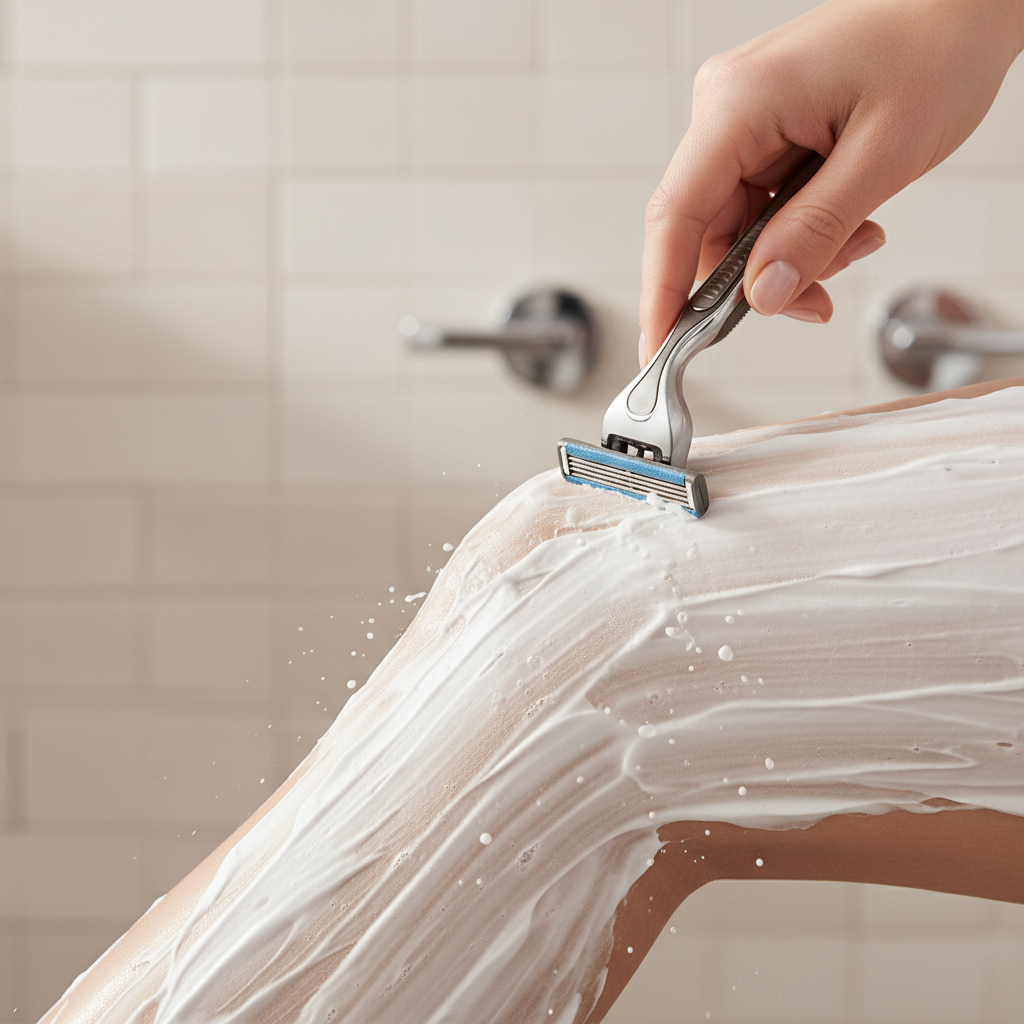
4) Check the tool: razor type and blade condition
There’s no universal “best razor,” but these rules hold up in real bathrooms:
- Newer blade wins when you’re bump-prone. If it tugs, it’s overdue.
- Fewer blades can help if you get ingrowns, because ultra-close cutting can push hair below the skin surface for some people.
- Clean matters: rinse thoroughly, shake dry, store out of pooled water. A damp razor grows grime fast.
The best way to shave legs without razor bumps (step-by-step)
This is the routine that tends to reduce irritation without turning shaving into a project.
- Apply shave gel and let it sit for 30–60 seconds so hair softens.
- Start with the grain (usually downward on lower legs). If you need closer, do a second pass across the grain, not immediately against it.
- Use short strokes on knees and ankles. Long strokes invite repeated scraping when the blade skips.
- Rinse the blade often. A clogged razor forces pressure, and pressure is where bumps start.
- One to two passes max per area. If you keep “touching up,” you’re shaving skin, not hair.
- Finish with a cool rinse to calm heat and remove residue.
If you’re trying how to shave legs without razor bumps and you only change one thing, make it this: less pressure, fewer passes. People underestimate how much that alone improves the next-day skin feel.
After-shave care: calm skin so bumps don’t start
Post-shave is where irritation either settles down, or turns into itchy dots.
- Pat dry, don’t rub. Towels can create friction when follicles are “open” and sensitive.
- Use a simple, fragrance-free moisturizer. Dry skin makes stubble feel sharper and can trigger more itching.
- If you’re ingrown-prone, consider a leave-on product with salicylic acid or glycolic acid a few times per week, not immediately after every shave if you’re sensitive.
- Avoid heavy oils right away if you notice clogged-looking bumps. Lightweight lotion often behaves better.
According to the Mayo Clinic, folliculitis can be triggered by friction, shaving, and bacteria, so keeping skin calm and avoiding extra rubbing right after shaving can matter more than people expect.
Common mistakes that quietly create bumps
Some habits feel “clean” or “thorough,” but they’re exactly what keeps bumps coming back.
- Shaving dry or using foamy products that collapse fast, your razor ends up skating on skin.
- Going against the grain every time, especially on thighs or bikini line-adjacent areas where hair can be thicker.
- Using a body scrub right before shaving and then shaving anyway, it can double up irritation.
- Wearing tight leggings immediately after if you’re bump-prone. Friction plus heat can trigger red dots.
- Assuming bumps mean you need “stronger” products. In a lot of cases, you need fewer actives and a cleaner shave.
What to use (and when): a practical product cheat sheet
Not everyone needs extra products, but if you’re troubleshooting, this table helps you pick based on the problem you actually have.
| Problem you notice | What usually helps | What to avoid |
|---|---|---|
| Red bumps same day | Fresh blade, more slip (shave gel), lighter pressure | Multiple “cleanup” passes, dry shaving |
| Bumps 1–3 days later | Shave with the grain, gentle exfoliation between shaves | Very close shaving against the grain, picking at bumps |
| Itching and dryness | Fragrance-free moisturizer, shorter hot showers | Alcohol-heavy aftershaves, strong scrubs |
| Frequent ingrowns | Consider fewer blades, or an electric trimmer for less-close cut | Ultra-close cartridge shaving daily |

When you should stop experimenting and get help
If bumps are mild, routine changes usually improve things. But some situations deserve a closer look.
- Spreading redness, warmth, pain, or pus: could be infection, it’s safer to consult a clinician.
- Dark marks that keep accumulating: post-inflammatory hyperpigmentation can linger, a dermatologist can suggest options that match your skin tone and sensitivity.
- Persistent, recurring folliculitis despite clean blades and gentle technique: you may need prescription treatment.
- Severe itching or rash after products: possible irritation or allergy, stop the product and consider professional advice.
Safety note: if you have diabetes, circulation issues, or immune conditions, shaving-related skin breaks can carry higher risk, so a quick check-in with a healthcare professional is a good idea.
Practical “next shave” plan (do this once, then adjust)
If you want a clean reset without overhauling your whole bathroom cabinet, try this for your next two shaves:
- Shower first, apply shave gel, wait 45 seconds.
- Use a clean, sharp blade, shave with the grain using short strokes.
- Limit to one pass, then only spot-treat with a second pass across the grain.
- Cool rinse, pat dry, apply fragrance-free lotion.
- Skip tight pants for a few hours if possible.
After that, if bumps still show up, adjust one variable at a time, usually blade type or direction gives the clearest signal.
Conclusion: smooth legs, calmer skin
Most people can shave legs without razor bumps by treating shaving like gentle hair cutting, not skin scraping, with a sharper blade, more slip, and fewer passes. If your bumps are delayed and stubborn, focus on ingrown prevention between shaves rather than chasing a closer shave in the moment.
If you’re shaving this week, pick one change you can keep: lighter pressure, shaving with the grain, or better aftercare. Consistency beats a complicated routine.
Key takeaways
- Prep softens hair, so the razor does less work.
- Pressure and repeated passes drive most irritation.
- Delayed bumps often mean ingrowns, not “bad luck.”
- Simple moisturizer can outperform harsh actives for sensitive skin.
FAQ
How do I shave legs without razor bumps if I have sensitive skin?
Keep it boring: fragrance-free shave gel, a sharp blade, and one pass with the grain. If you use acids, start low and use them between shaves rather than right after.
Is it better to shave legs up or down to avoid bumps?
Down (with the grain) tends to be gentler for many people. If you need closer smoothness, try a second pass across the grain instead of jumping straight to shaving upward.
Do more blades cause more razor bumps on legs?
Sometimes. Multi-blade razors can shave very close, which may increase ingrowns for some skin types. If bumps persist, testing a fewer-blade razor or an electric trimmer can be a practical experiment.
What should I put on my legs right after shaving to prevent bumps?
A simple, fragrance-free moisturizer is a safe default. If you’re prone to ingrowns, you can add a gentle exfoliant later, but layering strong actives immediately after shaving can irritate sensitive skin.
How often should I replace my razor to reduce razor bumps?
There’s no fixed number because hair thickness and storage conditions vary, but if you feel tugging, notice more redness, or the razor seems harder to rinse clean, swap it sooner rather than trying to “push through.”
Can shaving cream cause razor bumps?
It can if it contains fragrance or irritants for your skin, or if it doesn’t provide enough glide and you compensate with pressure. If bumps appear after switching products, simplify and patch-test when possible.
What if I still get bumps even with good technique?
At that point, consider whether the issue is recurrent folliculitis, eczema, or a true ingrown pattern that needs a different hair-removal method. A dermatologist can help you narrow the cause and recommend safe treatments.
If you’re trying to stop razor bumps without turning shaving into a science project, it often helps to build a small “repeatable kit” around your skin type, a forgiving shave gel, a cleaner blade routine, and a simple aftercare step you won’t skip when you’re rushed.